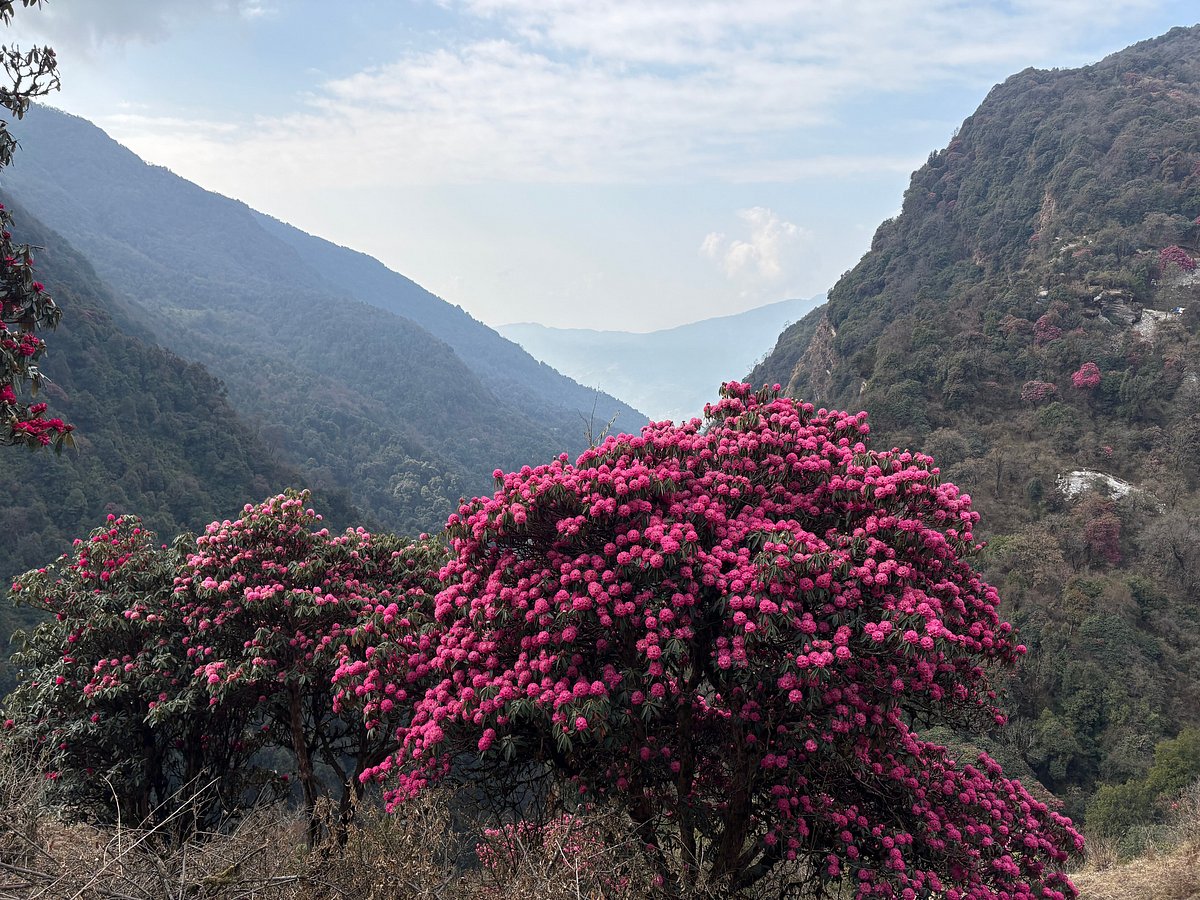
Spring is a lovely time to walk in Nepal. From March to May, the days turn warmer, the forests come into bloom, and there is more time to enjoy the trail. You can pass under rhododendron trees near Ghorepani, follow the river through Langtang, or climb higher towards Everest Base Camp.
Having so many options is part of the appeal. A short trek can combine village stays with a Himalayan sunrise. A longer one passes through several landscapes before reaching a base camp or a high pass.
Here are 15 reasons to trek in Nepal in spring, whichever route you choose.
1. Warmer Weather for Daytime Walking
Spring brings milder days to Nepal’s lower and middle hills, so the daily walk feels easier. Around Phakding, Ghorepani and Chhomrong, forest paths, village trails and open hillsides are pleasant to walk in the daytime.
The warmth is more noticeable in April and May. On sunny sections of the lower trails, light clothing is often enough. Lunch is nicer outside the teahouse, where you can sit in the sun and look out at the views. Once you reach your lodge, you can relax outdoors with a cup of tea before dinner.
2. Longer Days Mean More Time on the Trail
With more daylight, you can walk at a relaxed pace. You can pause to admire a mountain, take photos by a river, or enjoy a proper lunch without feeling rushed.
The extra light is useful after you finish walking, too. In Namche, there is time to explore the town. Around Kyanjin Gompa, you can take a short stroll past the houses and fields.
3. Rhododendrons Bloom on Many Mid-Hill Trails
On treks such as Ghorepani Poon Hill and Mardi Himal, the forest walk is a highlight in itself. Near Ghorepani, tall rhododendron trees flower beside the stone paths and fill the woods with red and pink blooms. Late March and April are often the best months here.
Other good areas include the forested parts of Langtang and the trail leading to Tengboche. Trees on warmer, lower slopes tend to bloom earlier than those higher up, so on a multi-day trek you may see the flowers at different stages.
4. New Growth Brings Fresh Colour to Forests and Valleys
As the weather warms, forests and valleys along many trekking routes come back to life with new leaves and shoots. On the lower and middle trails of Annapurna and Langtang, trees and shrubs turn fresh shades of green.
Between villages, you can spot these changes along forest paths, riverbanks and the edges of farm fields. Young leaves unfold overhead while new shoots push up beside the trail. These small details make the forest sections more enjoyable and give you plenty to look at between the big mountain viewpoints.
5. Snow-Capped Peaks Rise Above the Spring Landscape
In spring, green hills, flowering woods and snowy mountains can appear in a single view. Around Ghorepani and Tadapani, wooded slopes fill the foreground, while Annapurna South, Machhapuchhre and Dhaulagiri stand in the distance.
The scenery shifts as you gain height. Forests open into wide valleys, rocky slopes and glaciers, and the mountains seem closer. A single trek can show you the Himalayas from several distances: first over the hills, then across a valley, and finally from a viewpoint or base camp right beneath the peaks.
Need Help? / Call Us
+977-9801141500 or Chat with us on WhatsApp
Ask a Question?
6. Mornings Often Bring the Clearest Mountain Views
In spring, the best mountain views usually come early. On the trails above Namche, a clear morning can reveal Everest, Lhotse and Ama Dablam side by side. At Poon Hill, you can watch the first sunlight touch the Annapurna and Dhaulagiri ranges while the valleys below are still in shadow.
Early starts matter even more later in the season, when warmer afternoons tend to bring more cloud. A morning walk to a viewpoint gives you a better chance of seeing the peaks clearly. You can then return for breakfast or carry on with the day’s trek.
7. Snow Melts and Some High Trails Become More Accessible
As spring moves on, snow slowly clears from parts of the higher trails. Examples include the stretch from Thorong Phedi to High Camp on the Annapurna Circuit and the trail from Samdo to Dharamsala on the Manaslu Circuit. Warmer days and longer daylight also help on the longer stages towards the mountain passes.
This is why spring is a popular time for the Annapurna Circuit and Manaslu Circuit, with April and May often chosen for the high crossings. You can pair these upper sections with flowering woodland and village stays lower down the valley.
8. Almost Every Trek in Nepal Is a Good Option
Spring gives you plenty of routes to choose from, whether you have a few days or a couple of weeks. Shorter trips can head to Poon Hill or Mardi Himal. Longer journeys into the mountains include Langtang Valley, Everest Base Camp, and the Annapurna and Manaslu circuits.
You can also pick by scenery: rhododendron forests near Ghorepani, mountain lakes at Gokyo, or a high-pass crossing on a circuit trek. With so many routes that suit spring, you can plan around your interests, your trekking experience and the time you have.
9. Good Trail Conditions on Popular Himalayan Routes
Spring comes before the summer monsoon, so the lower and middle hills see many dry walking days. In these conditions, stone steps and forest paths are usually easier to walk, which makes the daily ups and downs between villages more comfortable.
On the Annapurna Base Camp route, this helps on the steps around Chhomrong and the forest paths between Sinuwa and Bamboo. In the Everest region, dry weather makes the forested climb to Namche more pleasant. These sections take several hours, so good trail conditions are a real plus.
10. A Main Trekking Season in the Everest Region
Spring brings warm walking days and blooming rhododendrons to the forest trails of the Everest region. From March to May, the routes are busy with trekkers. Namche’s shops and cafés, Tengboche Monastery and the paths through Pangboche add interest between the longer walking days.
The long daylight hours leave time for these cultural stops. You can wander through villages, learn about Sherpa life, see prayer wheels and mani walls, and visit monasteries along the way. If you enjoy mountain scenery as well as time in the villages, spring is a rewarding season to visit the region.
11. A Great Season to See Annapurna’s Changing Landscapes
Spring looks different from one part of Annapurna to the next. Between Ghorepani and Tadapani, red and pink rhododendrons line the forest trails in March and April. On an Annapurna Base Camp trek through these villages, you can walk under flowering trees before entering the open Sanctuary, where snowy peaks wrap around the valley.
The drier side of Annapurna has its own signs of the season. Around Marpha, apple trees blossom below the brown hills of the Kali Gandaki Valley. Adding this village to an Annapurna Circuit trek brings orchard walks and stone-paved lanes into the journey. After crossing the high pass, the blossoms give you one more reason to slow down and explore the villages.
12. Langtang’s Forests and Mountain Villages Feel Different in Spring
Langtang packs the season into a fairly compact valley trek. The lower trail follows the river through woodland, where rhododendrons and other spring flowers add colour. Higher up, the forest thins out towards Langtang village and the wider valley around Kyanjin Gompa.
From here, the trip is more about mountain views and village life. You can visit the monastery, ask about the locally made cheese, and walk to viewpoints above the valley. Forest trails, Tamang culture and open mountain scenery give a spring visit plenty of variety.
13. Teahouses and Services Are Open on Popular Routes
Spring is one of the main operating seasons for teahouses on Nepal’s established trekking routes. Lodges offer meals and a place to sleep in the popular valleys, so you can walk from village to village and finish each day with a bed and a hot dinner.
Food is part of the daily rhythm. Many trekkers start with porridge or eggs, stop for soup at lunch, and enjoy dal bhat after a long walk. This lodge network makes it easy to plan a multi-day trek, and it keeps you close to the communities along the trail.
14. Spring Light and Flowers Are Great for Photography
In spring, a single photo can hold several subjects. Flowering branches can frame a mountain, a stone path can lead the eye to a village, and early light can bring out the detail on a snowy ridge.
Around Tengboche, you can capture the monastery and Ama Dablam in one wide shot. Near Ghorepani, flowers and wooded hills add depth to the mountain views. If you also stop for the smaller details, you will come home with a varied set of photos, from close-up blossoms to sweeping mountain scenes.
15. You Can Join Local Festivals
Spring also brings you closer to Nepal’s festivals. Holi fills the streets with colour in March. Nepali New Year in mid-April is celebrated in places such as Kathmandu and Pokhara. In Bhaktapur, the New Year period coincides with Bisket Jatra, when chariots are pulled through the old town during one of the valley’s most important festivals.
Buddha Jayanti comes later in spring, with prayers and butter lamps at stupas and monasteries. If you arrive in Kathmandu a day or two before your trek, or stay on after it, these celebrations can give your mountain trip a cultural start or finish.
Conclusion
Pick your spring trek based on the places you most want to see and how much time you want to spend walking. A short forest route and a longer mountain journey can both make a rewarding trip, as long as the pace suits you.
Leave time for the villages, viewpoints and stops along the way. Reaching the final destination is only part of the experience. The days that lead you there are what make the trip memorable.
FAQs
1) Which Is the Best Spring Month for Trekking in Nepal?
April is a good all-round choice, with warm walking days, flowering forests and access to many popular routes. March suits trekkers who like a cooler start to the season. May is warmer and has longer daylight. The best dates also depend on the route you choose.
2) Is Spring a Good Time for First-Time Trekkers?
Yes. Spring has several routes that suit first-timers, including Ghorepani Poon Hill and shorter village treks in Annapurna. Choose a daily schedule that matches your fitness, practise on hills and steps before you go, and allow time to acclimatise if your route climbs higher.
3) Where Can You See Rhododendrons During a Spring Trek?
Ghorepani and the forest trails towards Tadapani are among the best places, and late March and April often bring the strongest display. Rhododendrons also bloom on parts of Mardi Himal, Langtang and the trail to Tengboche. The exact timing varies with altitude and local conditions.
4) Is Spring or Autumn Better for Trekking in Nepal?
Both are main trekking seasons. Spring offers flowering forests, longer daylight and warmer days as the season goes on. Autumn is best known for clear mountain views after the monsoon. If flowers and fresh seasonal growth matter to you, spring is a good pick.
5) Does It Rain During Spring Treks in Nepal?
Spring comes before the main summer monsoon, and many days are good for walking. Showers become more common as May goes on, especially later in the day. Starting early helps you make the most of the morning, and a waterproof layer is useful all season.
6) What Should You Pack for a Spring Trek in Nepal?
Bring light walking layers, a fleece, an insulated jacket and waterproof outer layers. Add comfortable trekking boots, sun protection, a headtorch and refillable water bottles. Higher routes also call for warm thermals, gloves and a sleeping bag suited to your overnight stops.
7) How Many Days Should You Allow for a Spring Trek?
A short trek such as Ghorepani Poon Hill fits into about four or five days. Langtang usually takes around eight days, while Everest Base Camp and Manaslu generally need about two weeks. Plan extra time for international arrival and departure.