Gosainkunda Trek

380
Trip Facts

  • Duration 7 Days
  • Trip Difficulty moderate
  • Max. Altitude 4610 m
  • Start and End Kathmandu - Kathmandu
  • Best Time All seasons
  • Accommodation Tea House

Trek to Nepal’s sacred alpine lakes at 4,380 m in Langtang National Park, where Himalayan views, Shiva pilgrimage and quiet mountain trails come together in one short adventure.

The Gosainkunda Trek is one of the most iconic short-to-moderate Himalayan journeys in Nepal, combining natural beauty, cultural richness, and deep spiritual significance. Located within the protected area of Langtang National Park, this trek takes you through lush forests, alpine landscapes, high mountain passes, and sacred glacial lakes. It is especially popular among trekkers who want a high-altitude experience close to Kathmandu without committing to a long expedition.

The journey begins in Kathmandu, where trekkers arrive and prepare for the adventure ahead. After a detailed briefing, the route starts with a scenic drive toward Syabrubesi, the gateway to the Langtang region. The drive follows the Trishuli River and passes through terraced farmland, small villages, waterfalls, and green hills. This transition from urban Kathmandu to rural mountain landscapes sets the tone for the trekking experience.

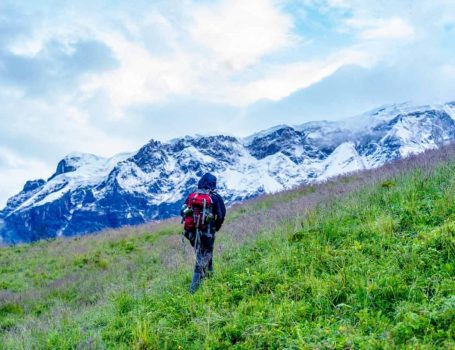
From Syabrubesi, the trail begins to climb steadily through dense forests of bamboo, oak, pine, and rhododendron. The early trekking days pass through peaceful natural surroundings rich in wildlife, including monkeys and a variety of Himalayan bird species. The trail gradually becomes steeper as trekkers ascend toward Sing Gompa, a small settlement known for its monastery and local cheese production. This section of the trek provides the first real sense of gaining altitude, as the air becomes cooler and the landscape more rugged.

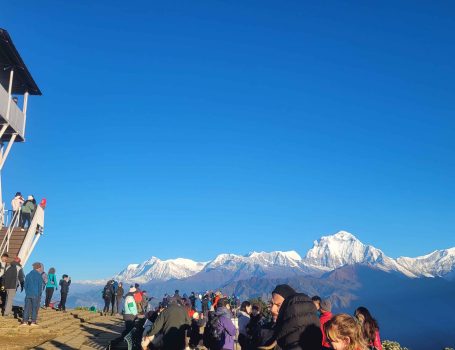
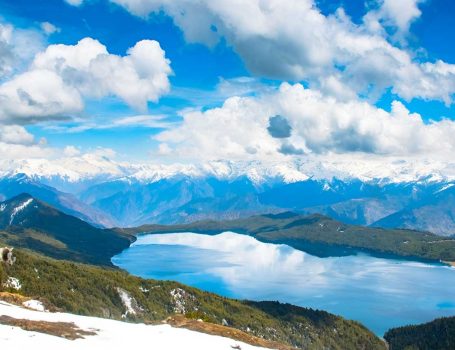
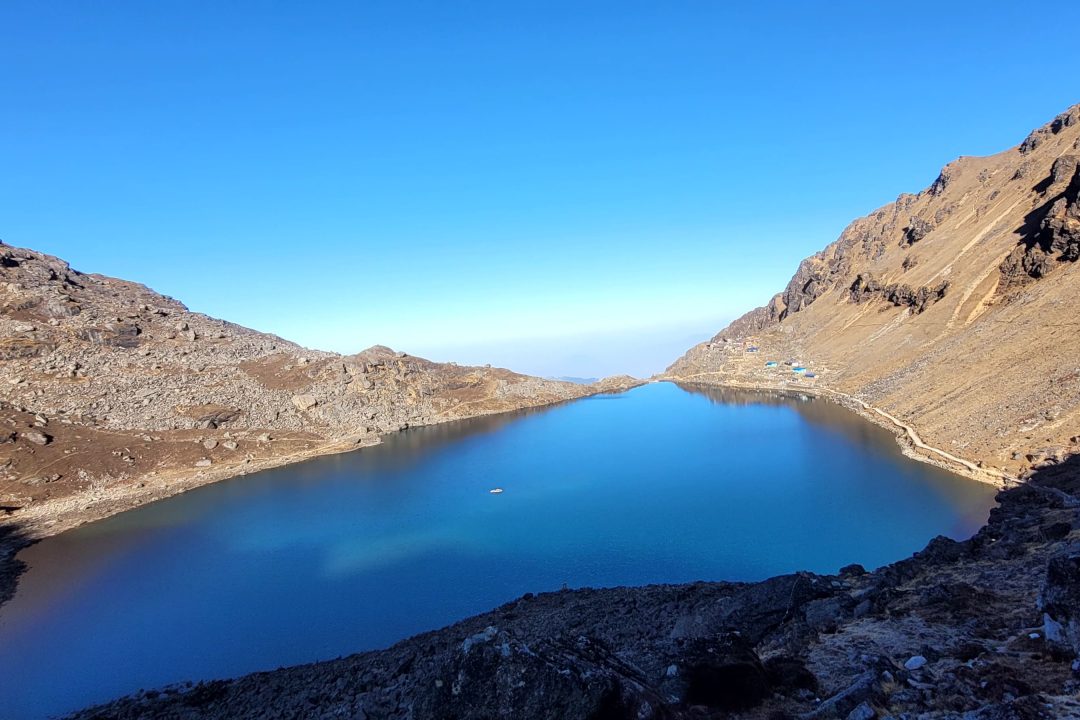
As the journey continues, the route leads toward Cholangpati and Lauribina, where the forest begins to thin and alpine scenery dominates. The trail offers increasingly wide views of the Langtang and Ganesh Himal ranges, creating a dramatic backdrop for the ascent. Eventually, trekkers reach Gosainkunda, a sacred lake situated at 4,380 meters. According to Hindu mythology, the lake was formed by Lord Shiva, making it one of the most important pilgrimage sites in Nepal. The atmosphere here is serene and spiritual, with crystal-clear waters reflecting the surrounding snow-covered peaks.

A rest and acclimatization day at Gosainkunda is essential for adjusting to the high altitude. Trekkers can explore nearby lakes such as Saraswati Kunda and Bhairav Kunda, or hike short ridges for panoramic views of the surrounding Himalayan landscape. The region feels remote and sacred, offering a rare combination of natural beauty and spiritual energy.

The most challenging part of the trek comes on the following day when crossing Lauribina Pass at 4,610 meters. This high mountain pass provides breathtaking panoramic views of the Himalayas, including Langtang, Ganesh Himal, and distant Tibetan peaks. The climb is physically demanding due to altitude and terrain, often involving steep ascents, cold winds, and sometimes snow. After reaching the summit, trekkers descend through rocky terrain toward the forested region of Ghopte.

From Ghopte, the trail continues descending through the Helambu region, passing through dense forests, ridges, and small rural settlements. The landscape gradually becomes greener and more populated as altitude decreases. Trekkers pass through Kutumsang and other hillside villages that showcase traditional Tamang and Sherpa culture. This section of the trek offers a peaceful contrast to the high alpine environment of Gosainkunda.

The final trekking day leads toward Sundarijal, passing through the beautiful forests of Shivapuri Nagarjun National Park. This protected area is rich in biodiversity and offers waterfalls, streams, and lush greenery. From Sundarijal, a short drive brings trekkers back to Kathmandu, marking the completion of the Himalayan journey.

Overall, the Gosainkunda Trek is a moderately challenging adventure suitable for trekkers with reasonable fitness. The highest point at Lauribina Pass and the sacred lakes of Gosainkunda are the major highlights, offering both physical challenge and spiritual reward. The trek combines diverse elements—dense forests, alpine terrain, Buddhist culture, and sacred mythology—making it one of Nepal’s most meaningful short Himalayan treks.

It is ideal for those seeking a balance of adventure, cultural immersion, and natural beauty within a limited timeframe. With proper acclimatization and pacing, the Gosainkunda Trek delivers an unforgettable experience of Nepal’s high Himalayas, sacred landscapes, and timeless mountain culture.

Why Choose the Gosainkunda Trek?

  • Sacred lakes: Gosainkunda is a holy lake for Hindus and Buddhists. Pilgrims believe Lord Shiva created it, and thousands visit during the Janai Purnima festival.
  • Alpine lake circuit: Besides Gosainkunda, you pass Saraswati Kunda, Bhairav Kunda and Surya Kunda, and often see more of the 100+ lakes in the area.
  • Close to Kathmandu: The trek starts near Dhunche or Sundarijal, so you reach the trailhead within a day.
  • Wide Himalayan views: On clear days you can see Langtang Lirung, Ganesh Himal, Manaslu and the peaks along the Tibetan border.
  • Mixed landscapes: The route goes through rhododendron and oak forest, then high pastures, then rocky terrain near the lakes.
  • Cultural experience: You walk through Tamang and Sherpa villages and stay with local hosts.
  • Good for first-time high-altitude trekkers: It is short, but the climb is steady, so you can build a good acclimatization routine.
  • Optional extension: You can continue over Laurebina La to Helambu for a longer crossing.

Outline Itinerary

Day 01 – Arrival in Kathmandu (1,350m)

Day 02 – Drive from Kathmandu to Syabrubesi (1,960m) – 6–7 Hours Drive

Day 03 – Trek from Syabrubesi to Sing Gompa (3,330m) – 5–6 Hours Trek

Day 04 – Trek from Sing Gompa to Gosainkunda (4,380m) – 6–7 Hours Trek

Day 05 – Acclimatization / Exploration Day at Gosainkunda (4,380m)

Day 06 – Cross Lauribina Pass (4,610m) & Trek to Ghopte (3,530m) – 7–8 Hours Trek

Day 07 – Trek to Sundarijal & Drive to Kathmandu – 6–7 Hours Trek + 1–2 Hours Drive

Day 08 – Final Departure

Estimated Cost Of Gosainkunda Trek

Pricing depends on group size, season, route and services. Typical ranges (confirm current rates before publishing):

  • Standard package (Dhunche start, about 8-10 days): USD 500 – 800 per person
  • Sundarijal–Gosainkunda–Helambu circuit (about 10-12 days): USD 800 – 1,200 per person
  • Private or customized trips: Higher rates apply for private guides, extra porters or upgraded lodges.

Difficulty In Gosainkunda Trek

Moderate to challenging.

  • Most days involve 5-7 hours of walking.
  • The ascent from Sing Gompa to Gosainkunda is steep and gains altitude quickly.
  • The Laurebina La section (if you continue to Helambu) is rocky and exposed.
  • Weather can change fast, and nights are cold above 3,500 m.
  • No technical climbing is needed. Good fitness and sensible acclimatization are enough.
  • Training with hiking, stair climbing and cardio for 4-6 weeks beforehand is recommended.

Altitude Info Of Gosainkunda Trek

  • Gosainkunda Lake: 4,380 m (14,370 ft)
  • Laurebina La Pass: about 4,610 m (15,125 ft)
  • Lauribina Yak: about 3,900 m
  • Sing Gompa (Chandanbari): about 3,300 m
  • Dhunche (trailhead): about 1,960 m
  • Sundarijal (alternate trailhead): about 1,460 m

The rapid ascent from Sing Gompa to Lauribina Yak and Gosainkunda is where altitude sickness is most likely. Plan acclimatization stops and avoid climbing too fast.

Best Time For Gosainkunda Trek

  • Spring (March – May): Blooming rhododendrons, mild temperatures and clear mornings. This is the best season for flowers and views.
  • Autumn (late September – November): Stable weather, crisp air and excellent mountain visibility. This is the most popular time.
  • Janai Purnima (August): Pilgrims gather at the lake for the annual festival. It is culturally rich but falls in the monsoon, so expect rain, leeches and cloud.
  • Winter (December – February): Cold, with snow and frozen lakes near the top. Only recommended for experienced trekkers with proper gear.
  • Monsoon (June – August): Heavy rain, slippery trails and limited views. Not recommended except for pilgrims.

Permits Required For Gosainkunda Trek

Trekkers need the following (fees are set by authorities and change from time to time, so confirm before publishing):

  • Langtang National Park Entry Permit: about NPR 3,000 per foreign visitor plus 13% VAT
  • TIMS Card or the current local-area trekking permit: requirements depend on the route and the latest government rules (many Langtang-area routes now use a local municipality permit)
  • Passport copies, passport-size photos and a valid Nepal visa

Your trekking company usually arranges all permits. Documents must be carried throughout the trek.

Accommodation In Gosainkunda Trek

  • Stay in teahouses and mountain lodges along the route.
  • Rooms are basic twin-share with a bed, mattress and blankets. Bring a sleeping bag rated for cold nights, since rooms are unheated.
  • Toilets are shared, and some are outside, especially at higher stops.
  • Lodges at Lauribina Yak and Gosainkunda are simple and can be crowded, particularly in peak season and during festival time.
  • Hot showers, charging and Wi-Fi (where available) usually cost extra.
  • In Kathmandu, we arrange hotel stays (3-star standard or upgrade on request).

Meals In Gosainkunda Trek

  • Breakfast, lunch and dinner are included during the trek, served at teahouses.
  • Common dishes: dal bhat (rice, lentils, vegetables), noodles, momo, fried rice, pasta, eggs, porridge, pancakes, soups and Tibetan bread.
  • Dal bhat is the most reliable and filling choice and comes with free refills in most lodges.
  • Tea, coffee, boiled water and bottled drinks are available at extra cost.
  • Vegetarian meals are recommended at higher altitudes, where fresh meat is limited and less safe.
  • Bring snacks such as energy bars, nuts and chocolate.
  • Use water purification tablets or a filter to cut down on plastic bottles.

Transportation Facilities In Gosainkunda Trek

  • Kathmandu to Dhunche (or Syabrubesi): private jeep or local bus, about 6-8 hours depending on road conditions.
  • Kathmandu to Sundarijal: short drive of about 1 hour, for the Helambu circuit option.
  • Return: drive back from Dhunche or from Melamchi/Helambu after the trek.
  • Airport pickup and drop-off are included in the package.
  • Road conditions can be affected by landslides and weather. We recommend adding a buffer day to your schedule.

Safety Information

  • Altitude sickness (AMS): Watch for headache, nausea, dizziness and poor sleep. Climb slowly, drink plenty of water, avoid alcohol and tell your guide at once if you feel unwell. Descend if symptoms get worse.
  • Acclimatization: Do not rush the section from Sing Gompa to Lauribina Yak and Gosainkunda. Consider spending an extra night at Sing Gompa or Lauribina Yak.
  • Weather: Mountain weather can change within hours. Start early, because afternoons are often cloudy or windy.
  • Trail safety: Stay on marked paths, take care on icy or slippery rocks and avoid walking alone.
  • Travel insurance: Required. It should cover trekking to 5,000 m, emergency evacuation and medical costs.
  • Guides: Our licensed guides carry a first aid kit and are trained in basic altitude and emergency response.
  • Emergency evacuation: Helicopter rescue is possible in serious cases and is usually covered by insurance.
  • Monsoon and landslides: Check local conditions for the road to Dhunche, especially in rainy months.

Responsible Tourism

  • Respect sacred sites: Gosainkunda is a holy lake. Do not swim, wash or throw anything in the water, and dress modestly.
  • Leave no trace: Carry out your waste, and use refill stations or purification instead of single-use plastic bottles.
  • Protect the park: Stay on trails, do not pick plants or disturb wildlife (red pandas, Himalayan tahr and monal pheasants live in the area).
  • Support local communities: Stay at family-run lodges, buy local products and hire local guides and porters.
  • Porter welfare: We provide fair wages, proper gear, insurance and sensible load limits.
  • Fuel and wood: Choose lodges that use efficient stoves, and avoid places that burn wood unnecessarily.
  • Cultural respect: Greet people with “Namaste,” ask before taking photos and walk clockwise around prayer walls and stupas.

Book / Enquire

Ready to walk to the sacred lakes of Gosainkunda?
Book your Gosainkunda Trek with us for expert local guides, well-planned acclimatization and a smooth, safe journey from Kathmandu.

👉 Enquire for Custom Itinerary
📞 Call or WhatsApp us today to check departure dates and group discounts.

Detailed Itinerary

  • Day 01 – Arrival in Kathmandu (1,350m)

    Upon your arrival at Tribhuvan International Airport in Kathmandu, you will be welcomed by our representative and transferred to your hotel. Kathmandu is a lively city filled with ancient temples, narrow streets, cultural landmarks, and trekking preparation hubs. The drive from the airport offers your first glimpse of Nepal’s busy yet fascinating urban life.

    After check-in, you can rest or explore the popular tourist area of Thamel, known for trekking shops, cafés, and local restaurants. It is also a good place for last-minute gear purchases. In the evening, your guide will conduct a detailed trek briefing covering route information, altitude safety, weather conditions, and equipment preparation. Permits for Langtang National Park will be arranged. Overnight stay in Kathmandu.

    Altitude: 1350 M
    Meals: N/A
    Accommodation: Hotel
  • Day 02 – Drive from Kathmandu to Syabrubesi (1,960m) – 6–7 Hours Drive

    After breakfast, you begin a scenic drive toward Syabrubesi, the gateway to the Langtang–Gosainkunda region. The road follows the Trishuli River, passing through lush hills, terraced farms, and small rural villages. The journey gradually shifts from busy highways to narrow mountain roads as you approach the Himalayas.

    Along the way, you will see beautiful countryside landscapes, waterfalls, suspension bridges, and traditional settlements. On clear days, distant views of Ganesh Himal and surrounding peaks appear. By evening, you arrive at Syabrubesi, a peaceful riverside village surrounded by green hills. Overnight stay in a tea house.

    Altitude: 1960 M
    Meals: B, L, D
    Accommodation: TEAHOUSE/LODGE
  • Day 03 – Trek from Syabrubesi to Sing Gompa (3,330m) – 5–6 Hours Trek

    Today marks the beginning of the trekking journey. The trail starts with a gradual climb through forests, crossing suspension bridges over the Langtang Khola. The lower section includes bamboo and oak forests rich in birdlife and occasional wildlife sightings.

    As you ascend, the trail becomes steeper and passes through rhododendron forests and small settlements. The air becomes cooler and the landscape more alpine. You will gradually gain altitude while enjoying peaceful mountain scenery.

    Finally, you arrive at Sing Gompa (Chandanbari), a quiet village known for its monastery and cheese factory. The area offers excellent views of the surrounding hills and a peaceful atmosphere. Overnight stay at Sing Gompa.

    Altitude: 3330 M
    Meals: B, L, D
    Accommodation: TEAHOUSE/LODGE
  • Day 04 – Trek from Sing Gompa to Gosainkunda (4,380m) – 6–7 Hours Trek

    After breakfast, the trail continues through dense rhododendron and pine forests. As you climb higher, vegetation gradually disappears, replaced by open alpine terrain and dramatic mountain views.

    You pass Cholangpati and Lauribina, where panoramic views of the Langtang and Ganesh Himal ranges become visible. The trail becomes more rugged and exposed as you approach higher altitudes.

    Eventually, you reach Gosainkunda, a sacred alpine lake surrounded by rocky hills and snow-capped peaks. The lake holds deep spiritual significance for Hindu and Buddhist pilgrims. The atmosphere here is peaceful, remote, and powerful. Overnight stay near Gosainkunda

    Altitude: 4380 M
    Meals: B, L, D
    Accommodation: TEAHOUSE/LODGE
  • Day 05 – Acclimatization / Exploration Day at Gosainkunda (4,380m)

    Today is dedicated to rest and altitude acclimatization. You can explore the surrounding area and visit other nearby lakes such as Saraswati Kunda and Bhairav Kunda. The region offers stunning reflections of mountains on clear days and a truly serene Himalayan environment.

    For those who wish, short hikes around the ridge provide panoramic views of the Langtang Himal range and distant mountain valleys. Due to the high altitude, slow movement and proper hydration are essential.

    The rest of the day is spent relaxing at the lodge, enjoying the peaceful atmosphere of the sacred lake region. Overnight stay at Gosainkunda.

    Altitude: 4380 M
    Meals: B, L, D
    Accommodation: TEAHOUSE/LODGE
  • Day 06 – Cross Lauribina Pass (4,610m) & Trek to Ghopte (3,530m) – 7–8 Hours Trek

    This is the most challenging and rewarding day of the trek. Early in the morning, you begin the ascent toward Lauribina Pass, the highest point of the journey at 4,610 meters.

    The climb is steep and physically demanding, often with cold winds and possible snow depending on the season. From the top, you are rewarded with breathtaking panoramic views of Langtang Himal, Ganesh Himal, Helambu region, and distant Tibetan peaks.

    After spending time at the pass, the trail descends sharply through rocky terrain and alpine landscapes. As you descend, vegetation gradually returns and forests begin to appear again.

    By late afternoon, you reach Ghopte, a remote settlement surrounded by forested hills. The peaceful environment provides a well-earned rest after a demanding day. Overnight stay at Ghopte.

    Altitude: 3530 M
    Meals: B, L, D
    Accommodation: TEAHOUSE/LODGE
  • Day 07 – Trek to Sundarijal & Drive to Kathmandu – 6–7 Hours Trek + 1–2 Hours Drive

    After breakfast, the trail continues descending through forests and ridges inside Shivapuri Nagarjun National Park. The route passes through dense woodland, waterfalls, and small rural settlements, gradually moving closer to the Kathmandu Valley.

    As you approach Sundarijal, the landscape becomes greener and more populated. From Sundarijal, a short drive takes you back to Kathmandu. After check-in at the hotel, you can relax, refresh, and celebrate the completion of your trek.

    In the evening, many trekkers enjoy a farewell dinner in Thamel, reflecting on their Himalayan journey. Overnight stay in Kathmandu.

    Altitude: 1350 M
    Meals: N/A
    Accommodation: Hotel
  • Day 08 – Final Departure

    Depending on your flight schedule, you may have free time for shopping or short sightseeing in Kathmandu. Later, our representative will transfer you to Tribhuvan International Airport for your departure.

    This marks the end of your Gosainkunda Trek, leaving you with unforgettable memories of sacred lakes, high mountain passes, forests, villages, and Himalayan lands.

What's included

  • All arrival and departure transfers by private vehicle.
  • All domestic pick up and drop off by private vehicle.
  • All meals (breakfast, lunch and dinner) during the entire trekking.
  • Transportation cost from Kathmandu – Dhunche - Kathmandu on shared vehicle(bus/jeep).
  • Twin sharing best available lodges/teahouses during the trekking.
  • Government Authorized Licensed Experienced Guide (salary, allowances, transportation, food, accommodation, equipment, insurance etc.)
  • Langtang National Park entry fee.
  • Complementary farewell dinner.
  • Government taxes, service charges and administration costs.
  • First Aid Kit.
  • Trip Completion certificate.
  • Travel & rescue arrangements.

What's not included

  • Accommodations and meals (breakfast, lunch and dinner) during your stay in Kathmandu.
  • Your travel insurance.
  • International flight and departure tax.
  • Porter to help trekkers luggage. 2 trekkers will share 1 porter, Max weight limit for a porter- 20 kg (10 kg per trekker, weight limit).
  • Personal expenses such as laundry, mineral water, battery charging, telephone calls, Wi Fi, sweets, snacks etc.
  • Any expenses of personal nature.
  • Nepal entry visa fees.
  • All bar and beverages bills.
  • Any loss arising due to unforeseen circumstances that is beyond All Nepal Excursion control.
  • Tips for guide and supporting staffs.
  • Anything that is not mentioned in cost included section.

Equipment

Clothing

  • Moisture-wicking base layers (top and bottom)
  • Fleece or insulated mid-layer
  • Down jacket (essential for nights and the lake area)
  • Waterproof jacket and trousers
  • Trekking trousers and shorts
  • Warm hat, sun hat, gloves and buff

Footwear

  • Broken-in waterproof trekking boots
  • Camp or lodge sandals
  • Wool trekking socks and liner socks

Gear

  • Sleeping bag (comfort rating to about -10°C)
  • Trekking poles
  • 30-40 L daypack with rain cover, and a duffel bag for the porter
  • Headlamp with spare batteries
  • Sunglasses (UV protection) and sunscreen
  • Water bottle or hydration bladder, purification tablets

Personal

  • Basic first aid, blister kit, personal medication, altitude medication (consult your doctor)
  • Toiletries, quick-dry towel, wet wipes, hand sanitizer
  • Power bank, camera, adapter
  • Passport, permits, insurance papers, cash in Nepali rupees

FAQs of Gosainkunda Trek

  • 1. Can I do Gosainkunda Lake without doing the full Langtang trek?

    Yes. You can directly do the Gosainkunda Lake Trek from Dhunche or Sundarijal without going into Langtang Valley. Many trekkers choose a shorter 5–8 day route just for the lake and Lauribina Pass.
  • 2. Is Gosainkunda trek harder than Annapurna or Everest short treks?

    It is moderately harder than Poon Hill but easier than Everest Base Camp in terms of duration. However, the challenge comes from: • Steep continuous uphill sections • High altitude above 4,000m • Limited settlements in upper region So it feels more “raw” and remote.
  • 3. Is there a risk of lake freezing or snow blocking the route?

    Yes. From late December to February, Gosainkunda Lake often freezes, and the trail above Lauribina may be covered in deep snow. In some cases, the pass can become difficult or temporarily closed depending on conditions.
  • 4. Can I see snow on this trek?

    Yes — almost guaranteed above Cholangpati and Lauribina (3,500m+), especially in: • Winter (Dec–Feb) ❄️ • Early spring (March) • Late autumn (Nov) Snow view is one of the biggest highlights of the trek.
  • 5. Is Gosainkunda only a religious trek?

    No. While it is sacred for pilgrims, it is equally a scenic Himalayan trekking route. Many international trekkers go purely for: • Mountain views • High pass adventure • Alpine lakes photography Religion adds cultural depth, but it is not mandatory for trekking.
  • 6. Do I need to take a bath in the lake like pilgrims do?

    No. Ritual bathing is only done by Hindu pilgrims during Janai Purnima. Trekkers can simply enjoy photography and sightseeing. Swimming is not recommended due to extremely cold water and religious respect.
  • 7. Is Lauribina Pass dangerous?

    Not dangerous, but physically demanding. The main challenge is: • Thin air (high altitude) • Steep ascent and descent • Possible snow/ice With proper pacing and guidance, it is very manageable.
  • 8. What is the biggest mistake trekkers make on this route?

    The most common mistake is: 👉 Rushing the ascent to Gosainkunda without acclimatization This increases the risk of altitude sickness. The trek must be done slowly with proper rest stops.
  • 9. Is this trek suitable for solo female travellers?

    Yes. The route is generally safe, especially with guides or organized groups. Tea houses are family-run, and local communities are very welcoming. However, solo trekking in remote sections is still better with a guide for safety.
  • 10. How cold does it really get at Gosainkunda?

    At night, temperatures can drop to: • -5°C to -15°C in peak seasons • Even colder with wind chill near Lauribina Pass Warm sleeping gear is essential.
  • 11. Can I charge my phone and camera during the trek?

    Yes, but: • Charging is available in most tea houses (paid service) • Power becomes limited at higher altitude • Solar charging is sometimes used in remote lodges Carry a power bank for backup.
  • 12. Why do some trekkers skip Gosainkunda and return early?

    Some people skip the lake or pass because of: • Bad weather (fog/snow) • Altitude sickness • Time constraints • Fatigue after Langtang section (if combined trek) Flexibility is important in this region.
  • 13. Is it better to go via Langtang or Sundarijal route?

    • Via Langtang: Longer, more scenic, more culture + mountains • Via Sundarijal: Shorter, faster, more direct to Gosainkunda Both routes are good depending on time and fitness.
  • 14. Will I see glaciers on this trek?

    Yes. From higher points near Gosainkunda and Lauribina Pass, you can see: • Glacial valleys • Snow ridges • Ice-covered peaks of Langtang Himal region It gives a true alpine Himalayan feel.
  • 15. Is Gosainkunda trek worth it if I have already done Annapurna?

    Yes — because it is completely different in experience: • More spiritual atmosphere • Less crowded trail • Higher alpine lake focus • Raw, rugged Himalayan terrain

What Other Travellers' Say

Trip You May Like

Handpicked adventures tailored for you—explore trips that match your travel spirit and curiosity.
Langtang Trek with Gosainkunda Lake

Langtang Trek with Gosainkunda Lake

Duration: 14 Days Trekking
Shey Phoksundo Lake Trek

Shey Phoksundo Lake Trek

Duration: 9 Days Trekking
ghorepani poonhill trek

Ghorepani Poonhill Trek

Duration: 9 Days Trekking
kori danda trek

Kori Danda Trek

Duration: 6 Days Trekking
Everest Panorama Trekking

Everest Panorama Trekking

Duration: 9 Days Trekking
rara lake trek

Rara Lake Trek

Duration: 9 Days Trekking

Our Affiliations

We are proudly affilliated with following organizations.

Planning a Trip?

Our travel experts who are working in this industry for more than a decade will help you. Consult to get started.

Meet Our Travel Expert

Dipendra Thapa
Nepal, Tibet and Bhutan