Lobuche East Climbing
1700

Trip Facts
- Duration 18 Days
- Trip Difficulty strenuous
- Max. Altitude 6119 M
- Start and End Kathmandu - Kathmandu
- Best Time Spring & Autumn
- Accommodation Hotel, Teahouse & Camping
Trip Highlights
- You hike above 5,000 meters to Everest Base Camp and climb Lobuche East.
- Ideal for high altitude trekkers and novice climbers seeking a more technical challenge
- Amazing views of Mount Everest, Lhotse, Makalu, and Khumbu valley from the summit
- Hike past picturesque Sherpa villages and Buddhist monasteries
- Lobuche East is an ideal peak to acclimatize and hone your climbing skills if attempting to climb an eight-thousander like Mount Everest or Lhotse
- Experienced Sherpa climbing guide and pre-climb training at Lobuche High Camp
Stand on a 6,119 m Himalayan summit with close views of Everest, Lhotse, Nuptse, Makalu and Ama Dablam, guided by experienced climbing Sherpas.
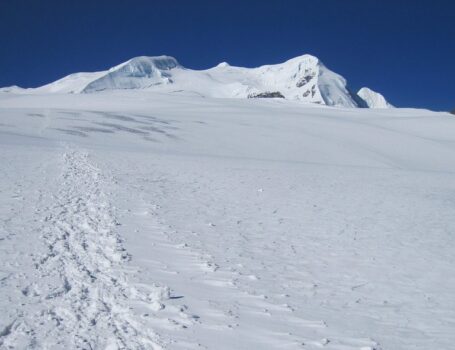
Lobuche Peak Climbing offers a challenging option for people who want to summit a Himalayan Peak above 6,000 meters in the Everest Region. You will have breathtaking panoramic views of the Everest Region from the summit of Lobuche East.
A popular trekking peak, Lobuche Peak, has two summits, Lobuche East and Lobuche West. While Lobuche West has a more technical and difficult route, Lobuche East is more approachable and easy. But compared to Island Peak and Mera Peak Climbing, Lobuche Peak Climbing is more technical and involves fixed ropes, ascenders, etc. Combined with a high-altitude trek to Everest Base Camp, the climbing itinerary offers the best challenge for adventurers seeking a technical challenge above 20,000 feet in the Himalayas.
Lobuche Peak climbing serves as great acclimatization or practice climb for seasoned mountaineers attempting to climb a much higher mountain – Mount Everest, Lhotse, Ama Dablam, etc. This Peak is very approachable for trekkers and first-time climbers who are comfortable with high-altitude trekking. Having some experience in alpine climbing (using ropes, harnesses, and jumars) would be helpful but not necessary.
Why Choose Lobuche East Climbing?
- A true Himalayan summit. Lobuche East combines a mountaineering challenge with a manageable technical grade, making it a popular step toward bigger peaks.
- Panoramic views. The summit ridge opens onto Everest, Lhotse, Nuptse, Pumori, Cho Oyu, Makalu and Ama Dablam.
- Classic Everest trail. Walk through Namche Bazaar, Tengboche Monastery and Dingboche on the way to the base camp.
- Built-in acclimatization. Rest days at Namche and Dingboche, plus a skills day and a reserve day, improve both safety and summit chances.
- Expert support. Licensed climbing guides, a high-altitude Sherpa team, and a hands-on skills briefing before the climb.
- Small groups, flexible planning. Private and custom departures with a weather window built into the schedule.
Outline Itinerary
Day 1: Arrive in Kathmandu (1,400 m).
Day 2: Kathmandu preparation.
Day 3: Fly to Lukla (2,860 m), trek to Phakding (2,610 m).
Day 4: Phakding to Namche Bazaar (3,440 m).
Day 5: Acclimatization day in Namche.
Day 6: Namche to Tengboche (3,860 m).
Day 7: Tengboche to Dingboche (4,410 m).
Day 8: Acclimatization day in Dingboche.
Day 9: Dingboche to Lobuche (4,940 m).
Day 10: Lobuche to Lobuche East Base Camp (about 5,000 m).
Day 11: Skills training and rest.
Day 12: Base Camp to High Camp (about 5,400 m).
Day 13: Summit day (6,119 m), descend to Base Camp.
Day 14: Reserve day.
Day 15: Lobuche to Pangboche (3,930 m).
Day 16: Pangboche to Namche Bazaar.
Day 17: Namche to Lukla (2,860 m).
Day 18: Fly Lukla to Kathmandu.
Day 19: Departure.
Note: The itinerary may change with weather, flight schedules and group acclimatization.
Difficulty In Lobuche East Climbing
Lobuche East is a challenging trekking peak. The route has a steep, exposed rocky section to High Camp, followed by a snow and ice ridge with fixed ropes near the summit. Climbers should be comfortable on steep terrain and wearing crampons, with strong cardiovascular fitness and some prior high-altitude trekking. No prior technical climbing is required, as basic skills are taught at Base Camp. Summit day is long, about 8–12 hours round trip from High Camp, and demands focus in cold and wind.
Altitude Info Of Lobuche East Climbing
- Lukla: 2,860 m
- Namche Bazaar: 3,440 m
- Dingboche: 4,410 m
- Lobuche: 4,940 m
- Base Camp: about 5,000 m
- High Camp: about 5,400 m
- Summit: 6,119 m
Altitude sickness (AMS) is a real risk. The itinerary includes two acclimatization days and a reserve day, and guides monitor oxygen saturation and symptoms daily.
Best Time For Lobuche East Climbing
- Spring (March to May): Stable weather, longer days and milder temperatures. This is the most popular season.
- Autumn (late September to November): Clear skies and excellent mountain views. Cold nights, with the best conditions in October.
- Not recommended: Winter (heavy cold and snow) and monsoon (June to August) due to poor visibility and trail conditions.
Permits Required For Lobuche East Climbing
- Lobuche East climbing permit from the Nepal Mountaineering Association (NMA). Fees vary by season, so confirm current rates.
- Sagarmatha National Park entry permit
- Khumbu Pasang Lhamu Rural Municipality permit
We arrange all permits for you. Please send a clear passport copy and passport-sized photos before departure.
Accommodation In Lobuche East Climbing
- Kathmandu: Not Available
- On trek: Simple tea houses with twin-sharing rooms and shared bathrooms. Rooms are unheated, so bring a warm sleeping bag.
- Base Camp and High Camp: Sleeping tents with foam mats. Dining and kitchen tents are set up at Base Camp.
- Upgrades: Single supplement and upgraded hotels are available on request.
Meals In Lobuche East Climbing
- Kathmandu: Breakfast included.
- On trek: Three meals a day plus tea or coffee. Menus include dal bhat, noodles, pasta, eggs, soups and porridge.
- Base Camp: Freshly prepared meals by our camp cook, with snacks and hot drinks.
- Water: Boiled or filtered water is advised. Bring purification tablets or a filter bottle.
Transportation Facilities In Lobuche East Climbing
- Private airport and hotel transfers in Kathmandu
- Scenic domestic flights Kathmandu–Lukla–Kathmandu (often from Ramechhap in peak season, with an early drive from Kathmandu)
- Porters carry main luggage on trek, up to 10–12 kg per climber
- All trekking and climbing is on foot
Safety Information
- Altitude monitoring. Guides check oxygen saturation and symptoms daily, and flag early AMS signs.
- Experienced team. Licensed guides, high-altitude Sherpas, tested fixed ropes and emergency oxygen.
- Weather decisions. Summit attempts depend on conditions. Safety always overrides the summit goal.
- Evacuation. Helicopter rescue is available, and insurance covering it up to 6,000 m is mandatory.
- Rope safety. Skills training before the ascent covers rope work and glacier travel.
- Communication. Guides carry satellite or mobile phones for emergency contact.
Responsible Tourism
- Fair wages, insurance and proper gear for all porters and staff
- Carry out all non-biodegradable waste from Base Camp and High Camp
- Avoid single-use plastics. Use refillable bottles and purification
- Respect local culture, monasteries and Sherpa traditions
- Stay on marked trails and protect Sagarmatha National Park’s wildlife
- Support local tea houses, shops and community initiatives
Book / Enquire
Ready to stand on top of the Khumbu?
Reserve your spot on a Lobuche East Climbing expedition today. Our team will help with permits, gear and a personalized itinerary.