Pikey Peak Trek

640

Trip Facts

  • Duration 10 Days
  • Trip Difficulty moderate
  • Max. Altitude 4,065 m
  • Start and End Kathmandu - Kathmandu
  • Best Time Sprin & Autumn
  • Accommodation Tea House/ Lodge

Trip Highlights

    • Witness a spectacular sunrise from Pikey Peak (4,065 m), offering one of Nepal's finest panoramic Himalayan viewpoints.
    • Enjoy breathtaking views of Mount Everest, Makalu, Kanchenjunga, Numbur Himal, Gaurishankar, and many other snow-capped peaks.
    • Trek through peaceful Sherpa and Rai villages, experiencing authentic Himalayan culture away from crowded trekking routes.
    • Explore beautiful forests of rhododendron, pine, and oak, especially vibrant during the spring blooming season.
    • Experience one of Nepal's least crowded Everest-view treks, perfect for travellers seeking tranquillity.
    • Visit the sacred Thupten Choling Monastery, one of the largest Tibetan Buddhist monasteries in the Solukhumbu region.
    • Walk along scenic ridgelines, alpine meadows, yak pastures, and traditional mountain settlements.
    • Discover the charming Sherpa village of Junbesi, known for its rich culture, monasteries, and warm hospitality.
    • Enjoy comfortable tea house accommodation throughout the trek with authentic Nepali hospitality.
    • Experience an ideal adventure for beginners and experienced trekkers alike, with a moderate maximum altitude of 4,065 meters.
    • Explore the cultural treasures of Kathmandu Valley, including UNESCO World Heritage Sites, after completing the trek.
    • Perfect for travellers seeking a short Himalayan adventure that combines mountain scenery, culture, and spirituality.

Stand at 4,065 m on Pikey Peak at dawn and see Everest, Lhotse, Makalu and over 100 Himalayan peaks, on a quiet, culturally rich trail with no Everest Base Camp crowds.

The Pikey Peak Trek is one of the most rewarding short trekking routes in Nepal, offering spectacular Himalayan views, rich cultural experiences, and relatively low crowds compared to the popular Everest Base Camp trail. Located in the lower Solukhumbu region, this trek is often described as one of the best hidden gems for viewing Mount Everest and the surrounding Himalayan giants without needing to go deep into high-altitude technical trekking.

The journey typically begins with a drive from Kathmandu to Dhap, gradually moving away from the busy city into the peaceful countryside of eastern Nepal. As the road winds through hills, rivers, and terraced farmland, trekkers get a glimpse of rural life that remains largely unchanged for generations. From Dhap, the trekking route officially begins, passing through traditional villages such as Jhapre and moving steadily toward higher elevations. These early days are important for acclimatization while also offering the first glimpses of distant Himalayan peaks.

As the trail progresses, the landscape changes noticeably. Dense forests of rhododendron, pine, and oak dominate the lower sections, while higher altitudes open into wide ridges and alpine pastures. Wildlife, birds, and grazing yaks are commonly seen along the way, adding to the natural beauty of the route. Unlike the crowded Everest Base Camp trail, the Pikey Peak route remains quiet and peaceful, allowing trekkers to fully immerse themselves in nature and local culture.

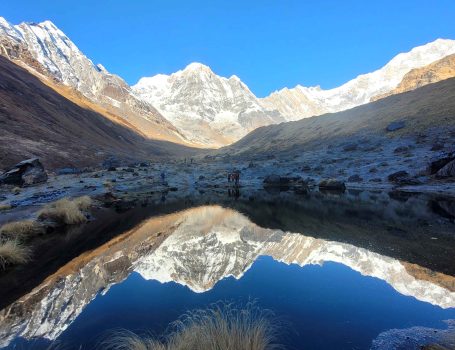
One of the most important highlights of this trek is reaching Pikey Peak itself, which stands at an elevation of 4,065 meters. The summit climb is usually done early in the morning before sunrise. Although the ascent is steep and cold, the reward at the top is extraordinary. On a clear day, trekkers are treated to one of the most panoramic mountain views in Nepal. The sight includes Mount Everest, Makalu, Kanchenjunga, Numbur Himal, and Gaurishankar, all stretching across the horizon. Watching the sunrise slowly illuminate these snow-covered peaks is often considered the emotional highlight of the entire journey.

After descending from the summit, the trek continues along scenic ridges toward Lamjura Danda, another beautiful high point known for its wide-open views and peaceful surroundings. From here, the trail gradually descends into greener valleys, leading toward the culturally rich village of Junbesi. This village is one of the most charming settlements in the region, known for its traditional Sherpa houses, Buddhist monasteries, and warm hospitality. Junbesi offers trekkers a chance to experience authentic Himalayan village life away from commercial trekking routes.

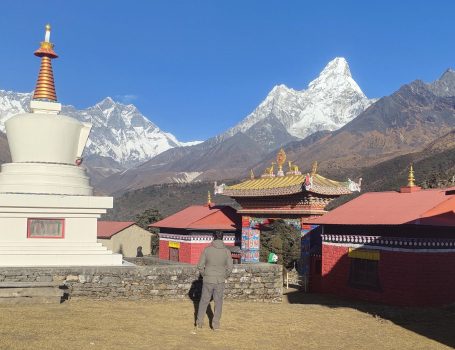
A significant cultural highlight of the journey is the visit to Thupten Choling Monastery, one of the most important Buddhist monasteries in the Solukhumbu region. The hike to the monastery passes through peaceful forests and open valleys, creating a calm and reflective atmosphere. At the monastery, trekkers can observe the daily lives of monks and nuns, witness prayer rituals, and experience the spiritual side of Himalayan culture. This cultural immersion adds depth to the trek beyond its natural beauty.

From Junbesi, the trail continues downhill toward Phaplu, passing through terraced fields, forests, and small rural settlements. This section of the trek offers a gradual return to lower altitudes while still maintaining scenic mountain views and cultural encounters. Phaplu serves as the final trekking point before returning to Kathmandu either by road or flight, depending on weather conditions and logistics.

The Pikey Peak Trek is considered moderately easy compared to high-altitude expeditions like Everest Base Camp or the Three Passes Trek. Most trekking days involve 4 to 7 hours of walking, making it suitable for beginners with reasonable fitness levels as well as experienced trekkers looking for a shorter, less crowded Himalayan experience. The maximum altitude reached is just over 4,000 meters, which reduces the risk of severe altitude sickness compared to higher treks.

One of the greatest advantages of this trek is its accessibility and flexibility. It can be completed in around 8 to 11 days, making it ideal for those with limited time. At the same time, it still delivers breathtaking Himalayan scenery, authentic cultural exposure, and a sense of adventure. The best seasons for trekking are spring (March to May) and autumn (September to November), when the skies are clear, and mountain visibility is at its best.

Overall, the Pikey Peak Trek offers a perfect combination of natural beauty, cultural richness, and a peaceful trekking experience. It is an excellent alternative to more crowded Everest routes and provides one of the most memorable sunrise views of Mount Everest. For trekkers seeking a balance between adventure and comfort, this journey stands out as one of the finest short treks in Nepal.

Why Choose Pikey Peak Trek?

  • Panoramic views without the crowds: Pikey Peak is one of Nepal’s best viewpoints for the Everest range, and far quieter than the main Khumbu route.
  • Moderate and accessible: It suits first-time trekkers, families and anyone short on time, with no technical climbing.
  • Rich culture: Walk through Sherpa, Rai and Tamang villages and visit monasteries such as Junbesi’s Thubten Choling Gompa.
  • Varied landscapes: Rhododendron and pine forests, terraced hills, yak pastures and alpine ridges.
  • Warm local hospitality: Stay in community-run lodges and homestay-style teahouses where your money stays in the village.
  • A good acclimatization trek: It is a gentle introduction to altitude before a bigger Himalayan trek.

Outline Itinerary

Day 01: Arrival at Kathmandu Airport and transfer to hotel in Kathmandu (1300 m/4593ft)

Day 2: Drive from Kathmandu to Dhap (2,850 m | 7–8 hrs drive)

Day 3: Trek from Dhap to Jhapre (2,920 m | 4–6 hrs trek)

Day 4: Trek from Jhapre to Pikey Base Camp (3,640 m | 6–7 hrs trek)

Day 5: Climb Pikey Peak (4,065 m) for sunrise and trek to Lamjura Danda (3,736 m | 6–7 hrs trek)

Day 6: Trek from Lamjura Danda to Junbesi (2,700 m | 3–4 hrs trek)

Day 7: Exploration Day – Thupten Choling Monastery Visit (2,700–3,031 m | 5–6 hrs hike)

Day 8: Trek from Junbesi to Phaplu (2,413 m | 4–5 hrs trek)

Day 9: Drive from Phaplu to Kathmandu (1,300 m | 8–10 hrs drive)

Day 10: Sightseeing in Kathmandu (1,300 m | ~6 hrs sightseeing)

Day 11: Departure from Kathmandu (1,300 m | Departure)

Cost Of Pikey Peak Trek

  • Estimated price: USD 450 per person, depending on group size, season and services.
  • Cost includes: Guide, porter, accommodation, meals, permits and transport as per the itinerary.
  • Cost does not include: International flights, Nepal visa, travel insurance, personal expenses, tips and drinks.
  • Tip: Private departures and larger groups usually bring the per-person price down.

Difficulty In Pikey Peak Trek

Easy to moderate. Most days involve 4–7 hours of walking on well-defined trails with steady ascents and descents. The summit day starts early (usually before sunrise) and is the hardest, mainly because of the cold and altitude. No previous trekking experience is needed, but basic fitness helps.

Altitude Info Of Pikey Peak Trek

  • Highest point: Pikey Peak, 4,065 m (13,337 ft)
  • Typical route points: Phaplu (~2,400 m), Junbesi (~2,700 m), Pikey Base / Pikey Peak viewpoint (~3,500–4,065 m)
  • Altitude advice: Ascend gradually, drink plenty of water, avoid alcohol, and tell your guide about any headache, nausea or dizziness. Our itineraries include acclimatization time.

Best Time For Pikey Peak Trek

  • Spring (March–May): Rhododendrons in bloom, clear mornings and stable weather.
  • Autumn (September–November): Crisp, clear skies and the best mountain views. This is the peak season.
  • Winter (December–February): Cold but clear. Possible on warm gear, with snow at higher points.
  • Monsoon (June–August): Not recommended because of rain, leeches and cloud-covered views.

Permits Required For Pikey Peak Trek

  • Local area permit: Required for the Pikey Peak area and arranged by us.
  • TIMS card or equivalent: Requirements can change, so we confirm current rules at booking.
  • Sagarmatha National Park permit: Not usually required for the standard Pikey Peak route, as it lies outside the park. We verify this for your exact itinerary.
  • What we need from you: A passport copy, passport photos and your arrival details. We handle the rest.

Accommodation In Pikey Peak Trek

  • On the trek: Simple teahouses and lodges with twin or dorm-style rooms, communal dining areas and shared bathrooms. Hot showers are sometimes available for a fee.
  • In Kathmandu: Comfortable 3-star hotel (upgrades available on request).
  • At altitude: Facilities are basic and nights are cold, so a good sleeping bag helps. We can arrange one if you don’t have your own.

Meals In Pikey Peak Trek

  • Breakfast, lunch and dinner are provided during the trek in teahouses.
  • Typical menu: Dal bhat (rice, lentils and vegetables), noodles, pasta, momos, soups, eggs, porridge and local potatoes.
  • Drinks: Tea, coffee and hot lemon. Bottled water is available at extra cost, and we recommend purification tablets or filters to reduce plastic.
  • Dietary needs: Vegetarian, vegan and other requests can usually be met if you tell us in advance.

Transportation Facilities In Pikey Peak Trek

  • Kathmandu to the trailhead: Private vehicle or Jeep to Phaplu / Salleri (about 8–10 hours), or a short flight to Phaplu where available, subject to schedule and weather.
  • During the trek: On foot, with porters carrying your main luggage.
  • Return: Drive or flight back to Kathmandu, with airport transfers included.
  • Note: Road and flight schedules can shift in bad weather, so we recommend a spare buffer day at the end.

Safety Information

  • Experienced guides: First-aid trained and familiar with altitude illness and local conditions.
  • Altitude monitoring: We follow a gradual ascent profile and check your health daily.
  • Insurance: Travel insurance covering trekking up to 4,500 m and emergency evacuation is mandatory.
  • Weather: We watch forecasts closely and adjust the plan if conditions are unsafe.
  • Emergency plan: Helicopter evacuation can be arranged if necessary and is covered by your insurance.
  • Summit day: Start early, dress in layers, and keep warm while waiting for the sunrise.

Responsible Tourism

  • Support local lodges, guides and porters, and buy local products where you can.
  • Carry out your non-biodegradable waste and reduce single-use plastic.
  • Stay on marked trails to protect vegetation, especially the rhododendron forests.
  • Ask permission before photographing people, and dress modestly in villages and monasteries.
  • Respect religious sites by walking clockwise around stupas and mani walls.
  • Our porters are fairly paid, properly equipped and weight-limited.

Book / Enquire

Ready to see Everest from Pikey Peak?
Join an unforgettable journey through Sherpa villages, forests and high ridgelines, with sunrise views of the world’s tallest mountains.

👉 Send an Enquiry | WhatsApp Us

Customize your dates, group size or add-ons. Our local team will reply within 24 hours.

Detailed Itinerary

  • Day 1: Arrival at Kathmandu Airport and transfer to hotel in Kathmandu (1300 m/4593ft)

    Your journey begins upon arrival in Kathmandu, the vibrant capital city of Nepal. After clearing immigration and collecting your luggage, you are met by your trekking representative and transferred to your hotel in the city. The drive from the airport is usually short but lively, giving you your first impression of Nepal’s busy streets, temples, and local life.

    Once at the hotel, you can rest after your international flight and recover from travel fatigue. Depending on your arrival time, you may have the opportunity to explore nearby areas such as Thamel, a popular tourist district filled with trekking shops, cafes, and local restaurants. In the evening, your guide will typically conduct a trek briefing session where you will be introduced to the itinerary, safety guidelines, altitude awareness, and final gear checks. This is also a good time to ask questions and prepare mentally for the trek ahead.

    Overnight stay in Kathmandu.

    Altitude: 1300 M
    Meals: N/A
    Accommodation: N/A
  • Day 2: Drive from Kathmandu to Dhap (2,850 m | 7–8 hrs drive)

    After an early breakfast, you leave Kathmandu and begin your scenic drive toward Dhap, the gateway to the Pikey Peak region. The journey starts on a paved highway before gradually transitioning into winding mountain roads as you move deeper into rural Nepal. Along the way, you pass through terraced farmlands, small towns, river valleys, and forested hillsides that showcase the country's diverse geography.

    As the drive continues, the roads become more rugged and less developed, especially after Okhaldhunga. You will make stops for meals and tea breaks at local roadside eateries, giving you a chance to experience authentic Nepali countryside life. Dhap is a quiet, peaceful settlement at a higher elevation, surrounded by rolling hills and distant mountain views. This is where your trekking adventure truly begins.

    Upon arrival, you settle into a basic tea house and enjoy a simple local dinner. The night is cool and calm, allowing your body to adjust to the higher altitude slowly.

    Overnight in Dhap.

    Altitude: 2850 M
    Meals: B, L, D
    Accommodation: TEAHOUSE/LODGE
  • Day 3: Trek from Dhap to Jhapre (2,920 m | 4–6 hrs trek)

    Your first trekking day begins after breakfast. The trail from Dhap to Jhapre is relatively moderate, making it a good introduction to walking in the Himalayan environment. The route takes you through a mix of forest paths, open ridges, and small traditional settlements inhabited by Rai and Sherpa communities.

    As you walk, you gradually gain altitude while enjoying views of rolling hills and distant Himalayan peaks. On clear days, you may catch your first glimpses of Mount Everest and other surrounding mountains, which feels rewarding after hours of trekking. The trail is peaceful and less crowded compared to the Everest Base Camp route, giving you a sense of solitude and connection with nature.

    Jhapre is a charming village perched on a hillside, offering beautiful panoramic views. There is also a small monastery where you can experience local Buddhist culture. The evening is quiet, with cold mountain air and star-filled skies.

    Overnight in Jhapre.

    Altitude: 2920 M
    Meals: B, L, D
    Accommodation: TEAHOUSE/LODGE
  • Day 4: Trek from Jhapre to Pikey Base Camp (3,640 m | 6–7 hrs trek)

    Today’s trek becomes more challenging as you move deeper into higher-altitude terrain. The trail gradually ascends through dense rhododendron and pine forests, which are especially beautiful during the blooming season. You may also pass yak grazing pastures and small herder shelters along the way.

    As you gain elevation, the vegetation becomes thinner and the landscape more open, revealing wider Himalayan views. The air becomes noticeably colder and thinner, and the trekking pace naturally slows down. This is an important acclimatization stage of the trek.

    Pikey Base Camp is a remote and peaceful location located just below the summit ridge. It is a simple resting area with basic tea house facilities. At night, the sky is usually extremely clear, making it one of the best places for stargazing in the region. The silence and remoteness of the area create a true mountain wilderness experience.

    Overnight at Pikey Base Camp.

    Altitude: 3640 M
    Meals: B, L, D
    Accommodation: TEAHOUSE/LODGE
  • Day 5: Climb Pikey Peak (4,065 m) for sunrise and trek to Lamjura Danda (3,736 m | 6–7 hrs trek)

    This is one of the most important and memorable days of the trek. You begin very early in the morning, often before sunrise, to climb Pikey Peak. The ascent is steep and takes around 2–3 hours, depending on your pace and weather conditions. As you approach the summit, the temperature drops and the wind becomes stronger, but the anticipation builds.

    From the top of Pikey Peak, you are rewarded with one of the most breathtaking panoramic views in Nepal. On a clear morning, you can see a long stretch of Himalayan giants, including Mount Everest, Makalu, Kanchenjunga, Numbur Himal, and Gaurishankar. Watching the sunrise slowly illuminate the snow-covered peaks is a truly unforgettable experience.

    After spending time at the summit, you descend back to base camp for breakfast and continue trekking along a scenic ridge trail toward Lamjura Danda. This section is long but incredibly beautiful, passing through forests, ridges, and open landscapes. Lamjura Danda is a windy high ridge known for its wide mountain views and peaceful environment.

    Overnight in Lamjura Danda.

    Altitude: 2525 M
    Meals: B, L, D
    Accommodation: TEAHOUSE/LODGE
  • Day 6: Trek from Lamjura Danda to Junbesi (2,700 m | 3–4 hrs trek)

    Today’s trek is shorter and more relaxed compared to previous days. You begin by descending through dense forests filled with birds and natural vegetation. The trail is peaceful and gradually leads you into lower elevations where villages become more frequent.

    As you continue walking, you reach Junbesi, one of the most culturally significant Sherpa villages in the region. Junbesi is known for its traditional houses, Buddhist monasteries, and warm hospitality. The village lies in a beautiful valley surrounded by hills and distant mountains.

    After arriving, you have the rest of the day to rest, explore the village, or simply enjoy the peaceful mountain atmosphere.

    Overnight in Junbesi.

    Altitude: 2700 M
    Meals: B, L, D
    Accommodation: TEAHOUSE/LODGE
  • Day 7: Exploration Day – Thupten Choling Monastery Visit (2,700–3,031 m | 5–6 hrs hike)

     This is a cultural rest day designed for acclimatization and exploration. After breakfast, you begin a scenic hike toward Thupten Choling Monastery, one of the most important Buddhist monasteries in the Solukhumbu region. The trail passes through forests, small streams, and open landscapes, offering peaceful surroundings throughout the hike.

    At the monastery, you can observe the daily life of monks and nuns, see prayer rituals, and experience the spiritual atmosphere of Tibetan Buddhism. The monastery is known for its calm energy and historical significance in the region.

    After spending time at the monastery, you return to Junbesi on foot. The rest of the evening is free to relax, interact with locals, or enjoy the peaceful environment of the village.

    Overnight in Junbesi.

    Altitude: 3031 M
    Meals: B, L, D
    Accommodation: TEAHOUSE/LODGE
  • Day 8: Trek from Junbesi to Phaplu (2,413 m | 4–5 hrs trek)

    Today marks the beginning of your descent toward lower elevations. The trail from Junbesi to Phaplu is relatively easy and scenic, passing through farmland, forest paths, and small rural settlements. You will notice the landscape becoming greener and warmer as you descend.

    Along the way, you may encounter local farmers working in their fields and children from nearby villages, giving you a glimpse of everyday life in rural Nepal. The trek is less demanding, allowing you to walk at a relaxed pace and reflect on the journey so far.

    Phaplu is a small town with basic facilities and a small airstrip. It is often used as an alternative exit point for trekkers returning from the Everest region.

    Overnight in Phaplu.

    Altitude: 2413 M
    Meals: B, L, D
    Accommodation: TEAHOUSE/LODGE
  • Day 9: Drive from Phaplu to Kathmandu (1,300 m | 8–10 hrs drive)

    After breakfast, you begin the long drive back to Kathmandu. The journey takes you through winding mountain roads, river valleys, and remote villages. Although the road can be bumpy and slow in some sections, the scenery is constantly changing and offers a final look at rural Nepal.

    You will stop along the way for meals and refreshments. As you get closer to Kathmandu, the landscape gradually shifts from rural hills to urban surroundings.

    Upon arrival in Kathmandu, you check into your hotel and enjoy a comfortable evening after several days in the mountains.

    Overnight in Kathmandu.

    Altitude: 1300 M
    Meals: N/A
    Accommodation: N/A
  • Day 10: Sightseeing in Kathmandu (1,300 m | ~6 hrs sightseeing)

    After completing your trek, today is dedicated to exploring the cultural and historical side of Kathmandu Valley. The day is usually relaxed, allowing you to move at an easy pace after the mountain journey. You visit some of the most important UNESCO World Heritage Sites, each reflecting Nepal’s deep spiritual and cultural heritage.

    You may start with Swayambhunath, also known as the Monkey Temple, which sits on a hill overlooking the entire valley. From there, you can continue to Boudhanath, one of the largest Buddhist stupas in the world, where monks, pilgrims, and locals walk in peaceful clockwise circles around the monument. Later, you may also visit Pashupatinath Temple, a sacred Hindu temple complex on the banks of the Bagmati River, known for its religious rituals and spiritual atmosphere.

    The day gives you a final opportunity to experience Kathmandu’s vibrant mix of tradition, spirituality, and daily life. In the evening, you return to your hotel, pack your belongings, and prepare for departure the next day.

    Altitude: 1300 M
    Meals: N/A
    Accommodation: Hotel
  • Day 11: Departure from Kathmandu (1,300 m | Departure)

    On your final day in Nepal, you wake up in Kathmandu and enjoy a relaxed morning depending on your flight schedule. This is the time to double-check your luggage, organize travel documents, and say goodbye to the trekking team who supported you throughout your journey.

    When the time comes, you are transferred to Tribhuvan International Airport for your onward flight. The drive through Kathmandu’s busy streets marks the transition from the peaceful mountains back to everyday life. As you leave Nepal, you carry with your unforgettable memories of the Pikey Peak Trek—sunrise views of Everest, quiet mountain villages, cultural encounters, and the peaceful rhythm of the Himalayas.

What's included

  • All arrival and departure transfers by private vehicle.
  • All domestic pick up and drop off by private vehicle.
  • All meals (breakfast, lunch and dinner) during the entire trekking.
  • Shared jeep transportation from Kathmandu-Khijiphalate and jeep from Salleri-Kathmandu.
  • Twin sharing best available lodges/teahouses during the trekking.
  • Government Authorized Licensed Experienced Guide (salary, allowances, transportation, food, accommodation, equipment, insurance etc.).
  • Complementary farewell dinner.
  • Government taxes, service charges and administration costs.
  • First Aid Kit.
  • Trip Completion certificate.
  • Travel & rescue arrangements.

What's not included

  • Accommodations and meals (breakfast, lunch and dinner) during your stay in Kathmandu.
  • Your travel insurance.
  • International flight and departure tax.
  • Porter to help trekkers luggage. 2 trekkers will share 1 porter, Max weight limit for a porter- 20 kg (10 kg per trekker, weight limit).
  • Personal expenses such as laundry, mineral water, battery charging, telephone calls, Wi Fi, sweets, snacks etc.
  • Any expenses of personal nature.
  • Nepal entry visa fees.
  • All bar and beverages bills.
  • Any loss arising due to unforeseen circumstances that is beyond All Nepal Excursion control.
  • Tips for guide and supporting staffs.
  • Anything that is not mentioned in cost included section.

Equipment

Clothing

    • Moisture-wicking base layers and trekking shirts

    • Insulated down jacket and a fleece

    • Waterproof and windproof jacket and trousers

    • Warm hat, gloves and buff

    • Trekking trousers and thermal leggings

Gear

    • Broken-in waterproof trekking boots and spare socks

    • Sleeping bag rated to -10°C (or rent in Kathmandu)

    • Trekking poles

    • Daypack (25–35 L) with rain cover

    • Headlamp with spare batteries

    • Sunglasses, sunscreen and lip balm

Essentials

    • Passport, permits and insurance papers

    • Water bottles and purification tablets

    • Basic first-aid kit, personal medicines and blister care

    • Power bank and universal adapter

  • Quick-dry towel and toiletries

FAQs of Pikey Peak Trek

  • 1. Why is Pikey Peak famous?

    Pikey Peak is renowned for offering one of the best panoramic sunrise views of Mount Everest and the surrounding Himalayan range. Even Sir Edmund Hillary reportedly considered it one of his favorite viewpoints for Everest.
  • 2. How difficult is the Pikey Peak Trek?

    The trek is considered moderate. It is suitable for beginners with a reasonable level of fitness, as most trekking days involve 4–7 hours of walking on well-established trails.
  • 3. What is the highest altitude reached during the trek?

    The highest point is Pikey Peak (4,065 meters / 13,336 feet).
  • 4. Is altitude sickness a concern?

    Although the trek reaches over 4,000 meters, the gradual ascent helps reduce the risk. Mild altitude symptoms are possible, but severe altitude sickness is uncommon when following the itinerary properly.
  • 5. When is the best time to do the Pikey Peak Trek?

    The best seasons are: • Spring (March–May): Rhododendron forests in full bloom with pleasant temperatures. • Autumn (September–November): Clear skies, stable weather, and outstanding mountain views.
  • 6. Can I see Mount Everest from Pikey Peak?

    Yes. On a clear day, Pikey Peak offers spectacular views of Mount Everest along with Makalu, Kanchenjunga, Gaurishankar, Numbur Himal, and many other Himalayan peaks.
  • 7. How many days does the Pikey Peak Trek take?

    The standard itinerary takes 11 days, including arrival, trekking, Kathmandu sightseeing, and departure. The trekking portion itself is generally completed in 8 days.
  • 8. Is this trek suitable for beginners?

    Yes. It is one of Nepal's best Himalayan treks for beginners because it combines moderate trekking with incredible mountain scenery without reaching extreme altitudes.
  • 9. What type of accommodation is available?

    Trekkers stay in local tea houses and mountain lodges, offering basic but comfortable rooms, warm meals, and friendly hospitality.
  • 10. What kind of food is available during the trek?

    Tea houses serve a variety of meals, including Dal Bhat, noodles, fried rice, soups, pasta, potatoes, eggs, pancakes, tea, coffee, and seasonal vegetables.
  • 11. Is a guide required for the trek?

    Yes. According to Nepal's current trekking regulations, international trekkers are generally required to trek with a licensed guide in most trekking regions, making the journey safer and more enjoyable.
  • 12. What permits are required?

    The trek typically requires: • Gaurishankar Conservation Area Permit (GCAP) • Local Municipality/Area Entry Permit (if applicable)
  • 13. What should I pack for the trek?

    Essential items include: • Warm clothing and thermal layers • Down jacket • Waterproof jacket and pants • Trekking boots • Sleeping bag • Trekking poles • Gloves and warm hat • Sunglasses and sunscreen • Personal medications and water bottle
  • 14. Is there electricity and Wi-Fi during the trek?

    Electricity is available in most villages, usually for charging devices (sometimes for an additional fee). Wi-Fi is available in some tea houses but can be slow and unreliable.
  • 15. Can I charge my phone and camera?

    Yes. Most tea houses offer charging facilities for a small extra charge, especially at higher elevations.
  • 16. Are ATMs available on the trekking route?

    No. There are no reliable ATMs along the trekking trail, so it's important to carry enough Nepali cash from Kathmandu.
  • 17. What makes Pikey Peak different from the Everest Base Camp Trek?

    Pikey Peak offers stunning Everest views with fewer crowds, lower altitude, shorter duration, easier trails, and a more authentic cultural experience, making it an excellent alternative to the Everest Base Camp Trek.
  • 18. Is travel insurance necessary?

    Yes. Comprehensive travel insurance covering high-altitude trekking, emergency medical treatment, and helicopter evacuation is strongly recommended.
  • 19. What wildlife can be seen during the trek?

    Trekkers may encounter Himalayan birds, musk deer, yaks, mountain goats, and various native flora, especially rhododendron forests in spring.
  • 20. Who is the Pikey Peak Trek ideal for?

    This trek is perfect for travellers who want breathtaking Himalayan scenery, authentic Sherpa culture, peaceful trails, and a rewarding trekking experience without the crowds and extreme altitude of Nepal's more famous routes.

What Other Travellers' Say

Trip You May Like

Handpicked adventures tailored for you—explore trips that match your travel spirit and curiosity.
Everest Three Passes Trek

Everest Three Passes Trek

Duration: 19 Days Trekking
upper mustang trekking

Upper Mustang Trekking

Duration: 14 Days Trekking
Mardi Himal Trekking

Mardi Himal Trek

Duration: 9 Days Trekking

Shey Phoksundo Lake Trek

Duration: 9 Days Trekking
Annapurna Base Camp Trek

Annapurna Base Camp Trek

Duration: 12 Days Trekking
Everest Panorama Trekking

Everest Panorama Trekking

Duration: 9 Days Trekking

Our Affiliations

We are proudly affilliated with following organizations.

Planning a Trip?

Our travel experts who are working in this industry for more than a decade will help you. Consult to get started.

Meet Our Travel Expert

Dipendra Thapa
Nepal, Tibet and Bhutan