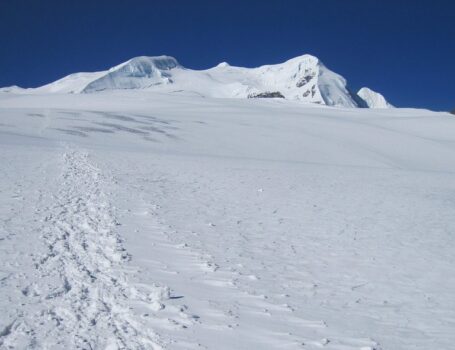
Island Peak Climbing
1600

Trip Facts
- Duration 18 Days
- Trip Difficulty strenuous
- Max. Altitude 6189 M
- Start and End Kathmandu - Kathmandu
- Best Time Spring & Autumn
- Accommodation Hotel, Teahouse & Camping
Trip Highlights
- Reach the summit of Island Peak in one day, without camping at High Camp
- Technical sections to hone climbing skills for novice climbers
- A straightforward route to the summit
- Overnight stays at traditional Sherpa villages while trekking
- Chance to interact with the Sherpas, the world's toughest mountain-dwelling community
- Inspiring Buddhist culture
- Close up views of 8000m, 7000m, and 6000m peaks and a walk through the ecologically diverse Sagarmatha National Park
- Guided by a climbing guide with 20+ years of mountaineering experience
Stand on the 6,189 m summit of Island Peak (Imja Tse) with expert Sherpa guides, combining the classic Everest Base Camp trail with a true Himalayan climbing experience.
Island Peak Climbing is not only a climbing adventure but a wonderful Himalayan trekking adventure as well. The trekking trail is well maintained and easy to walk. No technical maneuvers are needed while trekking. On the trail, you will be spending your nights at teahouses run by Sherpa families. These are like large and cozy family homes. At Island Peak Base Camp, you will be staying in a tented camp.
Island Peak trek and climb offers a fine Himalayan mountain climbing and trekking experience. The only criteria needed to complete is trip is physical fitness, a high level of endurance, and mental balance. Climbing Island Peak can be physically draining, but it is not that difficult to climb. It is the ideal mountain for novice climbers to scale before they progress onto something big. It is also the perfect Himalayan peak for climbers trying to summit a Himalayan peak for the first time.
Mountaineers aiming to climb Mount Everest usually choose trekking peaks like Island or Mera Peak to practice their climbing skills. Climbing on ice, rock, and snow with technical maneuvers and using ropes to belay and rappel down on Island Peak gives them the added confidence.
Though it is not technically challenging, one should bear in mind that climbing Island Peak can be physically challenging. On the summit day, you will be walking and climbing non-stop for more than 10 hours. Only those who are physically and mentally fit can complete this challenge.
Why Choose Island Peak Climbing?
- Perfect first 6,000 m peak: Island Peak is one of Nepal’s most popular trekking peaks, technical enough to be a real mountaineering challenge but achievable for fit trekkers with proper training.
- Two adventures in one: Trek through Sherpa villages and monasteries to Everest Base Camp and Kala Patthar, then climb to the summit.
- Panoramic summit views: Lhotse, Lhotse Shar, Makalu, Baruntse, Ama Dablam and Cho Oyu all surround you.
- Experienced climbing team: Government-licensed, summit-experienced Sherpa guides and a pre-climb training day at Base Camp.
- Smart acclimatization: The itinerary includes rest days and gradual altitude gain to improve safety and summit success.
- Small groups, personal attention: Tailored support, flexible planning, and transparent pricing.
Outline Itinerary
Day 1: Arrive in Kathmandu (1,400 m).
Day 2: Kathmandu preparation and sightseeing.
Day 3: Fly to Lukla (2,860 m) and trek to Phakding (2,610 m).
Day 4: Phakding to Namche Bazaar (3,440 m).
Day 5: Acclimatization day in Namche.
Day 6: Namche to Tengboche (3,860 m).
Day 7: Tengboche to Dingboche (4,410 m).
Day 8: Acclimatization day in Dingboche.
Day 9: Dingboche to Chhukung (4,730 m).
Day 10: Chhukung to Island Peak Base Camp (5,100 m).
Day 11: Climbing training at Base Camp.
Day 12: Summit day. Base Camp to Island Peak summit (6,189 m) and return.
Day 13: Contingency / rest day.
Day 14: Trek to Pangboche/Pheriche (about 4,200 m).
Day 15: Trek to Namche Bazaar (3,440 m).
Day 16: Namche to Lukla (2,860 m).
Day 17: Fly to Kathmandu.
Day 18: Final departure.
Note: The itinerary is flexible and may be adjusted for weather, group fitness, and acclimatization.
Difficulty In Island Peak Climbing
Island Peak Climbing is a challenging, moderate-to-strenuous expedition. It requires:
- Good cardiovascular fitness and previous multi-day trekking experience
- Comfort with 6-8 hours of walking per day, plus a 10-14 hour summit day
- Willingness to use crampons, ice axe, and fixed ropes (taught at Base Camp)
- Mental resilience for cold, thin air, and early-morning starts
Prior technical climbing experience is helpful but not required. We recommend 8-12 weeks of cardio, hiking with a loaded backpack, and strength training.
Altitude Info Of Island Peak Climbing
- Summit: Island Peak (Imja Tse), 6,189 m (20,305 ft)
- Base Camp: 5,100 m
- High Camp (optional): about 5,600 m
- Trek start (Lukla): 2,860 m
The route gains altitude gradually, with acclimatization days at Namche and Dingboche. Altitude sickness (AMS) is a real risk, so we monitor oxygen saturation daily and adjust the pace as needed.
Best Time For Island Peak Climbing
- Spring (March to May): Stable weather, warmer temperatures, and blooming rhododendrons. Most popular for summit attempts.
- Autumn (late September to November): Clear skies, crisp air, and excellent mountain visibility.
- Not recommended: Winter (extreme cold and high winds) and monsoon season (June to August: rain, cloud, and flight delays).
Permits Required For Island Peak Climbing
The following permits are arranged by us:
- Island Peak climbing permit from the Nepal Mountaineering Association (NMA), with a seasonal fee
- Sagarmatha National Park entry permit
- Khumbu Pasang Lhamu Rural Municipality permit
Permit fees are seasonal and subject to change. Please contact us for the latest rates. You’ll need your passport, passport-size photos, and a copy of your travel insurance.
Accommodation In Island Peak Climbing
- Kathmandu: Not Available
- Trek: Basic, clean tea houses with twin rooms, shared bathrooms, and a warm dining room. Rooms are unheated, so a good sleeping bag is essential.
- Base Camp: Tented camp with sleeping tents, a dining tent, and a toilet tent.
Meals In Island Peak Climbing
- Three meals a day are provided on the trek and climb.
- Typical menu: Dal bhat (rice, lentils, vegetables), noodles, pasta, momos, soups, eggs, porridge, pancakes, and Tibetan bread.
- Hot tea, coffee, and boiled water are available (at an extra charge on the trek).
- Vegetarian, vegan, and special dietary needs can be accommodated with advance notice.
- At Base Camp, our cook prepares fresh, high-energy meals.
Transportation Facilities In Island Peak Climbing
- Private airport and hotel transfers in Kathmandu
- Domestic flights between Kathmandu and Lukla (or Ramechhap on busy days, with a road transfer)
- Porters carry your main bags on the trek and climb
- On rare occasions, flights may be delayed or rescheduled due to weather. Please keep 1-2 buffer days at the end of your trip.
Safety Information
- Mandatory insurance with high-altitude and helicopter evacuation coverage up to 6,200 m
- Experienced, first-aid-trained guides monitor your health daily
- Daily oxygen saturation and pulse checks, and a medical kit carried throughout
- Descend immediately if AMS symptoms worsen: headache, nausea, dizziness, or breathlessness
- Fixed ropes, helmets, and proper equipment checks before every ascent
- Summit decisions are made by the lead guide, based on weather and climber condition
- Emergency helicopter rescue is coordinated by our office in Kathmandu
Responsible Tourism
- We follow “Leave No Trace” principles and carry out all non-biodegradable waste.
- We employ and fairly pay local guides, porters, and Sherpa climbers, with proper insurance and equipment.
- We support local tea houses, businesses, and community projects in the Khumbu region.
- Porter load limits are strictly respected.
- We encourage reusable bottles and water purification instead of single-use plastic.
- Please respect local culture, monasteries, mani walls (pass on the left), and sacred mountains.
Book / Enquire
Ready to stand on top of the Himalayas?
Join our expert-guided Island Peak Climbing expedition and experience Nepal’s most rewarding 6,000 m adventure.
👉 Send Enquiry | Chat on WhatsApp
Questions about dates, pricing, or a custom itinerary? Our team replies within 24 hours.