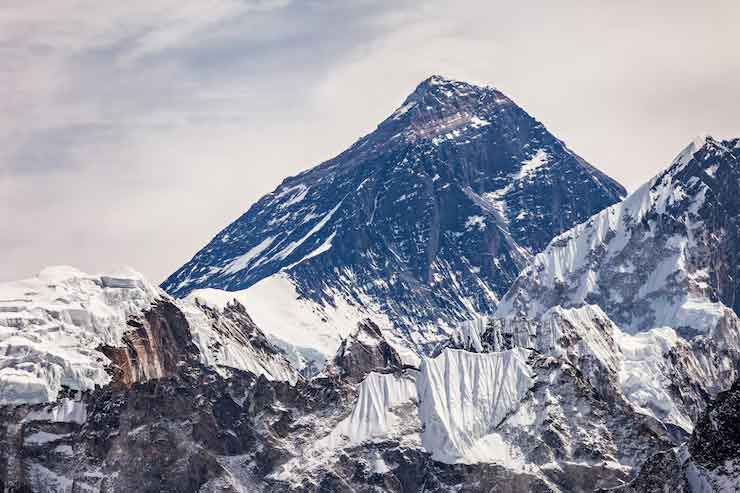
The Everest Base Camp trek in winter runs through Nepal’s Khumbu region in December, January and February. The main trail is quieter in these months, and the mountains are often covered in fresh snow. The trek begins with a flight to Lukla. From there, the trail follows the Dudh Koshi Valley through Phakding and Namche Bazaar, then climbs to Tengboche, Dingboche, Lobuche and Gorak Shep. You reach Everest Base Camp at 5,364 metres. Many trekkers also climb Kala Patthar, at about 5,545 metres, for close views of Everest and the peaks around it.
Winter changes the trail in several ways. Sunny days can give clear mountain views, but temperatures fall sharply after sunset, especially above Dingboche. Snow and ice can stay on shaded paths. Some teahouses at higher elevations offer fewer facilities, and weather can disrupt flights to and from Lukla. All of this affects your daily walking plan, your lodging and the gear you need to carry.
At All Nepal Excursion, we organise the classic Everest Base Camp route with local trekking guides. Accommodation, permits and transport are arranged according to the package you choose. Our standard 14-day itinerary includes rest days in Namche Bazaar and Dingboche to help you acclimatise before you go higher. This guide covers winter weather, conditions month by month, each section of the trail, accommodation, the itinerary and the practical points to check before you choose a winter departure.
Everest Base Camp Trek in Winter: Quick Facts
| Trek Information | Details |
| Trek duration | 14 days |
| Trekking region | Khumbu, Everest region, Nepal |
| Winter months | December, January and February |
| Starting point | Lukla |
| Main route | Lukla – Phakding – Namche – Tengboche – Dingboche – Lobuche – Gorak Shep |
| Everest Base Camp altitude | 5,364 m |
| Highest point | Kala Patthar, approximately 5,545 m |
| Accommodation | Teahouses and mountain lodges |
| Difficulty | Moderate to strenuous |
| Walking time | Usually 5–8 hours on trekking days, depending on the section |
| Acclimatisation | Namche Bazaar and Dingboche |
| Main winter challenges | Cold nights, snow, ice, shorter daylight and possible flight delays |
| Standard package | 14-day Everest Base Camp Trek |
Can You Trek to Everest Base Camp in Winter?
Yes. You can trek to Everest Base Camp in December, January and February. The classic route via Lukla, Namche Bazaar, Tengboche, Dingboche, Lobuche and Gorak Shep stays open for trekkers in these months. The upper sections are harder, though, when snow, ice or strong winds affect the trail. Conditions can differ from one village to the next. A path that is clear in the morning may become slippery later in the day or after fresh snow.
Winter suits trekkers who can handle very cold nights, carry proper cold-weather gear and change plans when conditions shift. It is not ideal if you expect the same lodge comforts and steady walking conditions you would find in spring or autumn. Before you leave, check room availability in the upper villages and keep a few spare days in case flights are delayed.
Advantages of Trekking in Winter
The biggest advantage is the quiet trail. Popular villages and viewpoints see far fewer trekkers than in the busy spring and autumn seasons. This is especially noticeable around Namche Bazaar and Tengboche. On clear days, visibility can be excellent, with sharp views of Everest, Lhotse, Nuptse, Ama Dablam and other Himalayan peaks.
Winter also gives you a different view of Khumbu village life. In places like Namche Bazaar, you can see daily routines without the rush of the main trekking season. Some businesses cut their opening hours, but travellers who enjoy peaceful mountain walks and are ready for the cold often prefer this.
Disadvantages of Trekking in Winter
Cold is the main challenge, especially at night and on early-morning walks. At higher elevations, temperatures can drop well below freezing. Some lodges have limited heating, hot showers may not be available, and water pipes can freeze. Menus and room choices also become more limited as you head towards Lobuche and Gorak Shep.
Snow and ice can slow you down and make some sections harder. Take extra care on the climb above Dughla, on the moraine between Lobuche and Gorak Shep, and on the ascent to Kala Patthar when the trail is frozen or snow-covered. Winter trekking needs good footwear, a steady pace and the willingness to adjust your plan when the weather or trail is unsafe.
Need Help? / Call Us
+977-9801141500 or Chat with us on WhatsApp
Ask a Question?
Everest Base Camp Winter Weather: December, January and February
Winter is the coldest season in the Everest region. Temperatures depend on elevation, wind, cloud cover and recent snowfall. Namche Bazaar is much warmer than Gorak Shep, where trekkers stay at about 5,164 metres. Even if the sun makes daytime walking pleasant, the temperature can fall fast after sunset or when the trail runs through shade.
The figures below are rough winter planning ranges. They are not official monthly averages or guaranteed conditions. Actual temperatures change with elevation, wind, cloud, snowfall and the exact location of your lodge or weather station. Climate records are easier to find for places like Namche Bazaar than for higher stops such as Dingboche and Gorak Shep, so treat the upper-elevation numbers as estimates. Exposed spots like Kala Patthar can feel much colder because of wind chill. Pack for temperatures lower than the expected night range, and check a current mountain forecast before you go.
| Location | December: Day / Night | January: Day / Night | February: Day / Night |
| Namche Bazaar (3,440 m) | 6–10°C / -5 to -10°C | 4–8°C / -8 to -12°C | 6–10°C / -6 to -10°C |
| Dingboche (4,410 m) | 3–8°C / -10 to -15°C | 1–6°C / -12 to -18°C | 3–8°C / -10 to -15°C |
| Gorak Shep (5,164 m) | -4 to 2°C / -15 to -20°C | -6 to 0°C / -18 to -25°C | -4 to 2°C / -15 to -20°C |
The table shows how much colder the upper Khumbu is than Namche Bazaar. This matters when you plan your sleeping gear and early-morning starts. Expect it to feel colder than the daytime figures suggest, and check the latest mountain forecast before you set out.
Everest Base Camp Trek in December
December is often a sensible choice for a first winter attempt. Early in the month, you can expect clear mountain views and quiet trails, before the deep cold sets in. Temperatures drop as you climb towards Dingboche, Lobuche and Gorak Shep, and snow can affect shaded paths and open sections. Rooms may be easier to find than in the coldest part of January, though not every lodge stays open all month. Christmas and New Year can bring more visitors than the quieter weeks earlier in December. Confirm your rooms in the upper villages before departure, especially if you plan to spend a night at Gorak Shep.
Everest Base Camp Trek in January
January is usually the coldest month on the trek. Days in Namche Bazaar can still be sunny, but nights are very cold. At Gorak Shep, overnight temperatures can reach about -18°C to -25°C in the coldest spells. Wind can make the early-morning climb to Kala Patthar especially harsh. For a January trek, bring insulated boots, warm gloves, a down jacket, thermal layers and a sleeping bag rated for severe cold. Some lodges above Dingboche may offer reduced services, and frozen pipes can limit water. Expect basic facilities, and confirm upper-village rooms before you leave the lower valley.
Everest Base Camp Trek in February
February is still winter, but temperatures usually begin to rise slowly towards the end of the month. The first half can bring very cold nights, icy paths and limited lodge services at higher elevations. Conditions may improve later in the month, though snowfall and sudden weather changes are still possible. February suits trekkers who want a quiet trail but would rather avoid the coldest weeks of January. Do not expect guaranteed spring conditions. Check the weather, trail conditions and lodge availability for your exact dates before you confirm the trek.
Everest Base Camp Trek Route and Winter Trail Conditions
From Lukla, the trek follows the Dudh Koshi Valley, then climbs through Namche Bazaar and Tengboche into the higher villages of Khumbu. Winter conditions change as you gain height. Lower sections often stay mostly dry, while shaded paths, stone steps and open trails above Dingboche may hold snow or ice. Knowing what to expect on each section helps you prepare for changes in footing, temperature and walking conditions.
Everest Base Camp Winter Route
Lukla (2,860 m) → Phakding (2,610 m) → Monjo (2,835 m) → Namche Bazaar (3,440 m) → Tengboche (3,860 m) → Dingboche (4,410 m) → Dughla/Thukla (4,620 m) → Thukla Pass memorials (approx. 4,830 m) → Lobuche (4,940 m) → Gorak Shep (5,164 m) → Everest Base Camp (5,364 m) → Kala Patthar (5,545 m)
Snow does not cover the route all winter. In one day, you may walk on dry ground in sunny areas and then meet frozen patches on shaded bends, stone steps and open slopes. The higher sections around Dughla, Lobuche and Gorak Shep need more care because of the altitude, open ground and uneven glacial terrain. Boots with good grip, walking poles and careful footwork help all the way.
Lukla to Namche Bazaar: Lukla, Phakding and Monjo
After you land at Lukla, the trail drops through Chheplung and Ghat towards Phakding, running alongside the Dudh Koshi River through villages and forest. Beyond Phakding, you pass Toktok and Benkar and reach Monjo, where the trail enters Sagarmatha National Park. It then continues through Jorsalle and over the Hillary Suspension Bridge, followed by a steady uphill climb to Namche Bazaar. This lower stretch usually sees less snow than the upper valley, but on winter mornings frost can make shaded stone steps and damp paths slippery. Take extra care on descents and near bridge approaches, and allow more time if the ground is icy.
Namche Bazaar to Tengboche
Leaving Namche Bazaar, the trail climbs above the Dudh Koshi Valley and follows an open hillside. On clear days, you can see Everest, Lhotse and Ama Dablam from here. The path then drops to the river at Phunki Tenga and climbs through forest to Tengboche, home to the well-known Tengboche Monastery. In winter, sunny viewpoints may be dry, while shaded forest paths can stay icy, especially in the early morning. The descent to Phunki Tenga and the long climb that follows make this a day for steady pacing. Try to reach Tengboche with enough daylight to settle into your lodge before the evening cold arrives.
Tengboche to Dingboche
From Tengboche, the trail descends through Deboche and continues towards Pangboche. On the way, you pass traditional Sherpa villages with open views of Ama Dablam. Beyond Pangboche, the route enters the wider Imja Valley. The forest slowly gives way to open ground as you climb to Dingboche, at about 4,410 metres. With less shelter, wind and cold are easier to feel than on the lower trail. Snow or ice may linger on shaded sections, depending on recent weather. Walk at a comfortable pace and keep the acclimatisation day in Dingboche in your plan. This rest day gives your body time to adjust before you head higher.
Dingboche to Lobuche
From Dingboche, the trail climbs towards Dughla, also called Thukla. Trekkers usually stop here before the steeper climb to the memorial area near Thukla Pass. The stone memorials honour climbers and mountaineers who died in the Himalayas. Past the memorials, the route crosses an open high-altitude valley to Lobuche, at about 4,940 metres. The climb above Dughla can be tough when snow or ice covers the path, and strong winds can make the open terrain feel much colder. Take short breaks when you need them, keep a steady pace and leave enough daylight to reach Lobuche safely.
Lobuche to Gorak Shep and Everest Base Camp
From Lobuche, a rocky trail leads to Gorak Shep, running over uneven ground beside the Khumbu Glacier. Loose stones, moraine ridges and occasional icy patches make this section harder than the lower village trails. Most trekkers rest at Gorak Shep before heading on to Everest Base Camp, at about 5,364 metres. The way to base camp crosses glacial moraine, not a smooth, level path, and winter snow or ice can slow you down. Stay with your guide, follow the marked trail and never step onto unstable glacier surfaces or restricted areas. Conditions can change quickly, so your guide’s judgement of the route should come before the planned walking time.
Gorak Shep to Kala Patthar
Kala Patthar, at about 5,545 metres, is one of the best-known viewpoints in the Everest region. It gives close views of Mount Everest, Nuptse and the surrounding peaks. The climb from Gorak Shep is steep and exposed, and temperatures can be very low before sunrise. An early-morning ascent is common in the main trekking seasons, but it should not be treated as a fixed rule in winter. Your guide should check the wind, visibility, trail conditions and the group’s physical state before choosing a start time. If conditions improve after sunrise, a later climb may suit you better.
If strong winds, ice or poor visibility make the ascent unsafe, postpone it or skip the viewpoint. Reaching the top matters less than finishing the trek safely. For a closer look at the mountains, Sherpa villages, monasteries and other landmarks along the route, read our Everest Base Camp Trek guide.
What Our Guides Say About the Everest Base Camp Trek in Winter
Our guides advise trekkers to watch the changing trail conditions closely once the route climbs beyond Namche Bazaar. A sunny morning does not mean the whole trail will be dry. Shaded forest paths, stone steps and higher sections can stay icy. The climb from Dughla to the Thukla Pass memorials and the rocky moraine between Lobuche and Gorak Shep need special care in winter. Our guides suggest giving these sections plenty of time instead of rushing to the next village. They also recommend confirming your accommodation before you leave Dingboche, because some upper-village lodges may have fewer rooms or reduced facilities in the coldest weeks.
For the Kala Patthar climb, our guides suggest choosing the start time based on the actual weather and trail conditions, not a fixed pre-sunrise plan. Strong winds, poor visibility and frozen ground can make an early climb harder, especially if you are tired from the walk to Everest Base Camp the day before. The guide should check the group’s health, visibility and wind before going ahead. Be ready to delay or skip the viewpoint if conditions are poor. A good winter trek depends on sensible decisions along the way, not on reaching every planned viewpoint.
Accommodation and Food During the Winter Trek
Teahouses and mountain lodges remain the main places to stay on the Everest Base Camp route, but availability and facilities can change in winter. In lower villages such as Phakding and Namche Bazaar, you usually have more choice of rooms and meals. Further up, towards Dingboche, Lobuche and Gorak Shep, fewer lodges stay open. The biggest concern is the section beyond Dingboche. Some lodges close for part of the winter, and others run with fewer rooms, shorter menus and limited hot water. Frozen pipes can affect water supply and hot showers. Before leaving Lobuche, confirm that a lodge is open at Gorak Shep instead of assuming a room will be free when you arrive.
Meals are mostly familiar trekking dishes, such as dal bhat, noodles, soup, fried rice, potatoes, eggs and simple breakfast items. Menus can be shorter at higher elevations, and food prices usually rise as supplies get harder to carry up. Bring a few energy snacks and protect your drinking water from freezing. When arranging your stay, ask about facilities, especially if you depend on hot water or charging services.
Everest Base Camp Trek in Winter: 14-Day Itinerary
Our standard Everest Base Camp trek takes 14 days through the Khumbu region. It includes acclimatisation days in Namche Bazaar and Dingboche before you reach the higher villages. The itinerary below follows the published All Nepal Excursion route, including the visit to Everest Base Camp, the Kala Patthar hike and the return through Pheriche, Namche Bazaar and Lukla.
In winter, walking times or the order of activities may need to change. Snow, lodge availability and flight operations can all affect the schedule. Treat the itinerary as the planned route, not a guarantee that every activity will happen at a set time.
| Day | Route | Overnight |
| 1 | Arrive in Kathmandu | Kathmandu |
| 2 | Fly to Lukla and trek to Phakding | Phakding |
| 3 | Trek from Phakding to Namche Bazaar | Namche Bazaar |
| 4 | Acclimatisation day in Namche Bazaar | Namche Bazaar |
| 5 | Trek from Namche Bazaar to Tengboche | Tengboche |
| 6 | Trek from Tengboche to Dingboche | Dingboche |
| 7 | Acclimatisation day in Dingboche | Dingboche |
| 8 | Trek from Dingboche to Lobuche | Lobuche |
| 9 | Trek to Gorak Shep and visit Everest Base Camp | Gorak Shep |
| 10 | Hike to Kala Patthar and descend to Pheriche | Pheriche |
| 11 | Trek from Pheriche to Namche Bazaar | Namche Bazaar |
| 12 | Trek from Namche Bazaar to Lukla | Lukla |
| 13 | Fly from Lukla to Kathmandu | Kathmandu |
| 14 | Departure from Kathmandu | — |
Day 1: Arrival in Kathmandu
Arrive in Kathmandu, meet our representative and transfer to your hotel. Use the day to sort out arrival matters and prepare for the trek. If you arrive early, check your clothing and gear, finish any last purchases and confirm the details of the next day’s flight and trek.
Day 2: Fly to Lukla and Trek to Phakding
Fly to Lukla and begin the walk to Phakding. The trail drops through villages and forest alongside the Dudh Koshi River. This is a fairly short first walking day, which gives you time to settle into the trekking routine. Keep your warm layers within reach, since it can be cold when you land in Lukla.
Day 3: Trek from Phakding to Namche Bazaar
Continue up the Dudh Koshi Valley through Monjo and the Sagarmatha National Park entrance area. After you cross the Hillary Suspension Bridge, the trail climbs steadily to Namche Bazaar. The long ascent makes this one of the harder early days. Walk at an easy pace and rest whenever you need to.
Day 4: Acclimatisation Day in Namche Bazaar
Stay a second night in Namche Bazaar to help your body adjust. A gradual hike towards Syangboche or the Everest View Hotel lets you walk higher and then return to sleep at the same altitude. Keep the pace relaxed and follow your guide’s advice. Use the rest of the day to recover and prepare for the higher stages.
Day 5: Trek from Namche Bazaar to Tengboche
Follow the trail above the Dudh Koshi Valley, drop towards the river and then climb to Tengboche. The route has open viewpoints and forested stretches. If time allows and the monastery is open, visit Tengboche Monastery. In clear weather, the village offers views of Ama Dablam and the nearby mountains.
Day 6: Trek from Tengboche to Dingboche
Walk through Deboche and Pangboche, then continue into the Imja Valley. The landscape opens up as you gain height and leave the forest behind. Dingboche is an important stop before the route heads on to Lobuche. Take your time on the climb and drink water regularly.
Day 7: Acclimatisation Day in Dingboche
Rest in Dingboche to acclimatise. A short, gradual walk towards Nangkartshang Hill lets you spend time at a higher elevation before coming back down to the village. Adjust the walk to your health, the weather and your guide’s advice. Avoid hard exertion and report any signs of altitude sickness.
Day 8: Trek from Dingboche to Lobuche
Continue towards Dughla and climb to the memorial area near Thukla Pass. From there, the trail follows the high valley to Lobuche. The altitude and open terrain make this a demanding day. Winter snow or ice can slow you down, especially on the climb above Dughla. Leave enough time to reach your lodge before evening.
Day 9: Trek to Gorak Shep and Visit Everest Base Camp
Walk from Lobuche to Gorak Shep over rocky moraine. After checking in and resting, continue to Everest Base Camp if the weather, trail and group’s condition allow. The route crosses uneven ground beside the Khumbu Glacier, so watch your footing carefully. Return to Gorak Shep for the night.
Day 10: Hike to Kala Patthar and Descend to Pheriche
If the weather, visibility and trail are suitable, hike from Gorak Shep to Kala Patthar for views of Everest, Nuptse and the peaks around them. The climb is steep and exposed, and winter winds and icy ground can make it especially hard. Your guide should check the group’s health and the conditions before deciding when to start. You do not need to leave before sunrise if waiting for daylight makes the walk safer. After the viewpoint, descend towards Pheriche. If the climb is unsafe or someone is unwell, skip Kala Patthar and follow your guide’s advice. This is a demanding day, so leave plenty of time for the descent.
Day 11: Trek from Pheriche to Namche Bazaar
Retrace your steps through the lower Imja Valley and the Tengboche area towards Namche Bazaar. You sleep at a lower altitude tonight, but the trail still has several ups and downs. Take care on stone steps and shaded paths, especially if snow or ice is still on the ground.
Day 12: Trek from Namche Bazaar to Lukla
Continue down the Dudh Koshi Valley, crossing suspension bridges and passing through villages along the way. The trail has a mix of descents and short climbs before you reach Lukla. Once there, get ready for the flight back and confirm the latest flight details with your guide or trekking team.
Day 13: Fly from Lukla to Kathmandu
Take the flight back to Kathmandu, weather and flight operations permitting. Winter weather can delay or cancel flights, so do not book an international departure right after your expected arrival from Lukla. If the flight is postponed, you may have to stay on in Lukla or arrange another way back.
Day 14: Departure from Kathmandu
Transfer to the international airport for your onward flight. If your Lukla flight was delayed, you may need extra time in Nepal, depending on your travel plans. A buffer after the scheduled trek is especially useful in winter.
For the package’s official day-by-day details, see our 14-day Everest Base Camp Trek itinerary.
Everest Base Camp Trek Cost in Winter 2026/2027
The cost of the Everest Base Camp trek depends on group size, included services, accommodation, flights and final travel plans. Our standard 14-day package lists these prices per person.
| Group Size | Price per Person |
| 1 trekker | USD 1,790 |
| 2–5 trekkers | USD 1,690 |
| 6–10 trekkers | USD 1,606 |
| 11–15 trekkers | USD 1,521 |
| 16–25 trekkers | USD 1,437 |
Winter arrangements can change the final quote, especially if lodge availability, flight changes or itinerary adjustments need extra services. Confirm the price and inclusions for your exact dates before you book.
What Is Included in the Standard Package?
- Airport pickup and drop-off by private vehicle, as per the itinerary.
- Kathmandu hotel stay as per the itinerary, with complimentary breakfast.
- Kathmandu–Lukla–Kathmandu domestic flight tickets, including airline taxes and fuel surcharges.
- Breakfast, lunch and dinner on trekking days.
- Twin-sharing teahouse or lodge accommodation during the trek.
- Sagarmatha National Park entry permit and required trekking paperwork, including TIMS registration as listed in the package.
- An experienced, government-licensed, English-speaking trekking guide.
- Porter service, with one porter for every two trekkers.
- Guide and porter wages, meals, accommodation and insurance.
- An assistant guide for groups of more than six trekkers.
- A basic first-aid kit carried by the guide.
- Necessary government paperwork and applicable taxes.
- Pre-trek briefing in Kathmandu.
- Farewell dinner in Kathmandu, as listed in the package.
What Is Not Included?
- International airfare and Nepal visa fees.
- Travel and medical insurance, including emergency evacuation cover.
- Personal trekking gear, clothing and medication.
- Personal expenses such as drinks, snacks, desserts, hot showers, drinking water, phone, internet and laundry.
- Meals in Kathmandu, unless the package specifically includes them.
- Extra accommodation, meals or transport caused by delays or other circumstances beyond the company’s control.
- Tips for guides and porters.
- Any service not specifically listed in the package inclusions.
For a full breakdown of package costs, personal expenses and what affects your total budget, read our Everest Base Camp Trek Cost Guide.
Lukla Flights During Winter
Lukla flights run in winter when visibility, wind and airport conditions allow. Clear mornings often give good flying conditions, while snow, cloud or strong wind can cause delays or cancellations. Even a scheduled flight is not certain to depart until conditions are right.
In the busy spring and autumn periods, some flights may leave from Ramechhap (Manthali) instead of Kathmandu because of air traffic congestion. Winter arrangements can be different, so check the departure airport on your confirmed ticket and itinerary instead of assuming every flight leaves from the same place.
We recommend keeping a buffer before your international departure from Nepal. If your Lukla flight is delayed, you may need an extra night in Kathmandu or Lukla. Helicopter options may be available in some cases, but they depend on weather, aircraft availability, operational clearance and extra cost. Talk about these options before the trek, and do not count on them as a guaranteed backup.
How Difficult Is the Everest Base Camp Trek in Winter?
The Everest Base Camp trek is a moderate to strenuous high-altitude trek, and winter makes some sections harder. The standard route needs no technical mountaineering skills, but you should be ready for several hours of walking on uneven ground, steady uphill sections and long descents. The highest point on the itinerary is Kala Patthar, at about 5,545 metres.
The extra challenge in winter comes from the cold and the changing trail surface at high altitude. Frozen ground can slow your descents, and snow or ice calls for more careful footing. The stretch between Dingboche and Lobuche and the moraine near Gorak Shep need particular attention. A steady pace, the right gear and a flexible schedule help more than trying to finish each section quickly.
Fitness and Preparation
Train with regular walks, uphill hikes, stair climbing and outings with a loaded daypack. Build up the length of your training gradually so you can handle several days of walking in a row. Good cardiovascular fitness helps with the physical effort, but it does not prevent altitude sickness. Choose broken-in trekking boots with good grip and enough room for warm socks. Practise with trekking poles before you leave, and make sure your gloves, jacket and other layers are comfortable to walk in. Your gear should keep you warm while you move and also when you sit in a cold lodge.
Altitude and Acclimatisation
The trek climbs from Lukla, at about 2,860 metres, to Everest Base Camp at 5,364 metres and Kala Patthar at about 5,545 metres. Our standard itinerary includes acclimatisation days in Namche Bazaar and Dingboche so your body can adjust before you go higher. Common signs of altitude sickness include headache, nausea, dizziness, unusual tiredness and loss of appetite. Tell your guide if symptoms appear, and do not climb higher while you feel unwell. Severe symptoms, such as confusion, trouble walking in a straight line or breathlessness at rest, need urgent medical attention and descent. The planned itinerary must always give way to health and safety.
For more on route difficulty, acclimatisation and seasonal conditions, read our Everest Base Camp Trek Difficulty and Best Time Guide.
What to Pack for the Everest Base Camp Trek in Winter
Winter packing needs more insulation than a spring or autumn trek. Your clothing must keep you warm while walking, during cold evenings in the lodge and at exposed viewpoints like Kala Patthar. Layers let you adjust as your effort and the temperature change.
| Category | Recommended Equipment |
| Base layers | Thermal top and bottom, moisture-wicking shirts |
| Insulation | Fleece or insulated mid-layer and a warm down jacket |
| Outer layers | Windproof and waterproof jacket and trousers |
| Hands and head | Insulated gloves, liner gloves, warm hat, buff or balaclava |
| Footwear | Broken-in trekking boots with good grip, warm trekking socks |
| Sleeping | Cold-rated sleeping bag suited to the expected temperatures |
| Walking equipment | Trekking poles, headlamp and spare batteries |
| Winter traction | Microspikes or other traction aids when conditions require them |
| Sun protection | Sunglasses, sunscreen and lip balm |
| Personal essentials | Water bottle, water purification method, personal medication and first-aid supplies |
| Electronics | Power bank, charging cable and protective storage for batteries |
Keep spare gloves and socks dry, and store batteries in an insulated pocket when it is very cold. A headlamp helps because daylight hours are shorter, especially if your group starts walking early. Microspikes can be useful when snow or ice covers the trail, but whether you need them depends on conditions at the time. Your guide can tell you when to use them. For more practical advice on gear, preparation and walking the route, see our Everest Base Camp Trekking Tips.
Safety Tips for Winter Trekking in the Everest Region
Winter trekking calls for attention to altitude, cold exposure and changing mountain weather. These safety points matter throughout the trek:
- Recognise altitude sickness: Headache, nausea, dizziness, unusual tiredness and loss of appetite can be early signs. Tell your guide and do not go higher while you feel unwell.
- Know the serious warning signs: Confusion, difficulty walking straight, breathlessness at rest or a worsening condition needs urgent medical attention and descent. Do not keep trekking with severe symptoms.
- Protect yourself from cold injuries: Keep your hands, feet and face well covered. Numbness, lasting pain or changes in skin colour can signal cold injury, so tell your guide right away.
- Stay hydrated and fuelled: Drink often and eat enough, even when the cold lowers your thirst or appetite.
- Respect acclimatisation: Keep the planned rest days in Namche Bazaar and Dingboche. Do not cut them just to shorten the trip.
- Follow weather decisions: Snowfall, strong wind and poor visibility can make the upper trail unsafe. Follow your guide’s advice about delaying or changing the day’s plan.
- Know your evacuation cover: Your travel insurance should cover high-altitude trekking up to at least the highest point on your itinerary, along with emergency helicopter evacuation where needed. Check the policy’s altitude limits and exclusions before you travel.
Your health and safety come before reaching Everest Base Camp or Kala Patthar on a set day. If symptoms or weather make it unsafe to continue, changing the plan or descending is the right decision.
Best Month for the Everest Base Camp Trek in Winter
December, January and February each have their own advantages and challenges. December is usually the more practical winter choice because it comes before the coldest weeks. January suits trekkers who are ready for severe cold and possibly reduced lodge services. February slowly warms up towards the end of the month, though winter conditions can continue.
| Month | Main Advantage | Main Challenge | Suitable For |
| December | Quieter trails and generally better lodge availability than midwinter | Increasing cold and possible snowfall | Trekkers prepared for winter conditions |
| January | Very quiet route and clear days during settled weather | Coldest nights and a higher risk of icy trails | Experienced or well-equipped winter trekkers |
| February | Gradual warming later in the month | Cold conditions and uncertain snow or lodge availability | Trekkers who want a quieter route before spring |
No winter month guarantees stable weather. Pick your departure based on your cold-weather experience, your available time and how flexible you can be, not on a single average temperature. If you want a winter trek but worry about the harshest cold, consider the early or late part of the season, depending on current weather and lodge arrangements.
Practical Winter Trekking Information and Insider Tips for Everest Base Camp
Some practical details are easy to miss when you plan from home. Lodge arrangements, walking schedules, gear storage and flight plans can all shape your trip. These tips focus on the arrangements worth thinking about along the Khumbu route.
1. Confirm Lodge Availability Before Leaving Dingboche
Accommodation gets harder to predict as you approach Lobuche and Gorak Shep in winter. Some lodges close for a while, and others run with fewer rooms and facilities. Before you leave Dingboche, find out which lodges are taking guests in Lobuche and confirm your stay at Gorak Shep. Do not assume every lodge will be open when you arrive.
2. Allow Extra Time for the Dughla and Thukla Pass Climb
The climb from Dughla to the memorial area near Thukla Pass is one of the tougher parts of the route. Winter conditions can slow you down, so do not plan the day too tightly. Leave enough time for breaks and for the rest of the walk to Lobuche.
3. Understand the Different Trail Conditions Between Namche and Tengboche
This section has an open hillside, a drop to Phunki Tenga and another climb through forest to Tengboche. Ground conditions can differ a lot between sunny and shaded spots. Set off early enough to have daylight for the descent and the final climb, instead of reaching Tengboche late in the afternoon.
4. Prepare for the Moraine Walk Between Lobuche and Gorak Shep
The trail follows uneven rocky moraine beside the Khumbu Glacier. Loose stones, ridges and shifting paths can make the walk slower than you expect. Keep your daypack organised so essentials are easy to reach, and stay on the route your guide chooses instead of taking shortcuts across the moraine.
5. Decide the Kala Patthar Ascent Time With Your Guide
A pre-sunrise climb is popular, but in winter a later start may be more practical. Talk about the timing with your guide the evening before and confirm it again in the morning. Base the decision on the forecast, visibility and the group’s condition, not on sunrise alone.
6. Keep a Separate Water Bottle for the Night
Water bottles can freeze on very cold nights at high elevations. Protect your drinking water overnight, and use an insulated bottle or cover if needed. If you use a reusable bottle, make sure the lid is tight before you put it in your sleeping bag.
7. Organise Your Electronics Before Reaching the Upper Villages
Charging can be limited or expensive at higher elevations. Charge your phone, camera and power bank whenever you get a chance, and carry the cables you need. Protect devices from the cold when you are not using them, especially on long outdoor walks.
8. Keep Frequently Used Clothing Accessible
Keep your warm hat, gloves, spare layer and windproof jacket where you can grab them without opening your main duffel bag. This makes it easier to adjust during breaks or when the temperature changes. Pack spare socks in a waterproof bag in case your walking socks get damp.
9. Check Your Winter Traction Equipment Before the Trek
If you plan to bring microspikes, practise fitting them over your trekking boots before you leave. Check that they fit snugly and come off easily. Whether you need them depends on the trail, so ask your guide when to use them instead of wearing them on every surface.
10. Keep a Buffer for Lukla Flights
Flight delays can affect both the start and the end of your trek. Keep your schedule flexible, especially before your international departure. Confirm flight details with the trekking team and ask what happens if weather stops the scheduled flight.
Final Practical Advice
Keep your acclimatisation days, confirm upper-village lodging in advance and pack so that essentials are easy to reach. Winter trekking works best when you can adjust the daily plan to real conditions instead of treating the itinerary as a fixed timetable.
Why Trek With All Nepal Excursion?
All Nepal Excursion has organised Himalayan trekking journeys since 2012. Our Everest Base Camp programme follows the classic Khumbu route, with acclimatisation stops in Namche Bazaar and Dingboche before the higher villages. The published package includes a licensed trekking guide, porter arrangements, accommodation, meals on trekking days, permits and domestic flights, according to the service you select.
Our team is led by Prakash Lamsal, Founder and CEO. Local experience matters for a winter departure, especially when checking upper-village lodging, planning the walk above Dingboche and allowing for Lukla flight delays. We encourage you to talk to our team about your gear, travel dates and expectations before you depart, so the arrangements match the conditions and services available for your trip.
Plan Your Everest Base Camp Trek in Winter
The Everest Base Camp trek in winter takes you through a quieter Khumbu region, but cold nights, shorter days and changing trail conditions call for careful preparation. December, January and February each offer a different experience. The right month depends on your cold-weather experience, your gear, your available time and your willingness to adjust plans when conditions change.
Explore our Everest Base Camp Trek package for the 14-day itinerary and current group arrangements. If you are considering a winter departure, contact our team to discuss travel dates, upper-village lodging, guide and porter arrangements, flight flexibility and the gear you will need.
Need Help? / Call Us
+977-9801141500 or Chat with us on WhatsApp
Ask a Question?
Frequently Asked Questions
1) Can you trek to Everest Base Camp in December?
Yes. December is a possible month for the trek. The route is usually quieter than in spring and autumn, but temperatures drop at higher elevations and snowfall can affect the trail. Confirm your lodging at Lobuche and Gorak Shep before departure.
2) Is January too cold for the Everest Base Camp Trek?
January is the coldest month of the winter season, but the trek may still be possible with the right gear and careful planning. Nights at Gorak Shep can fall to around -18°C to -25°C in cold spells. The early-morning climb to Kala Patthar can be especially cold, so it should depend on the weather and your guide’s assessment.
3) Is February a good month for Everest Base Camp?
February can work well if you want a quieter route and can handle winter conditions. Temperatures slowly begin to rise towards the end of the month, but snow, ice and cold nights are still possible. Check lodge availability and current trail conditions for your dates.
4) Are teahouses open on the Everest Base Camp Trek in winter?
Many teahouses in the lower villages stay open, but lodging gets more limited at higher elevations. Some lodges around Lobuche and Gorak Shep may have fewer rooms and reduced facilities, and others may close for a time. Confirm availability before you start the upper part of the trek.
5) Are Lukla flights available in winter?
Yes. Lukla flights run in winter when weather and visibility allow. Snow, cloud and strong wind can cause delays or cancellations. Keep some flexible time in your itinerary, and check your confirmed departure airport and flight details.
6) Do I need microspikes for the winter EBC Trek?
Microspikes can help when snow or ice covers the trail, especially on shaded sections and the moraine above Lobuche. Whether you need them depends on current conditions. Your guide can tell you if traction aids are needed on your travel dates.
7) How much does the Everest Base Camp Trek cost in winter?
The cost depends on group size and the services in the package. Our published standard package has different per-person rates by group size. Check the current NHT package price and confirm the final quote for your winter departure before booking.
8) Is the Everest Base Camp Trek in winter suitable for beginners?
It can be possible for a fit and well-prepared beginner, but winter is harder than the main trekking seasons. First-time high-altitude trekkers should understand the cold, the altitude risks, the limited upper-village facilities and the chance of delays before choosing a winter departure. A gradual itinerary and an experienced guide are important.
9) How many days are needed for the Everest Base Camp Trek in winter?
Our standard itinerary is 14 days, including arrival and departure in Kathmandu, two acclimatisation days and the return to Lukla. Winter travel may need extra flexibility, so allow buffer time if you have an international flight to catch.
Posted on