Annapurna Circuit Trek

820
Trip Facts

  • Duration 14 Days
  • Trip Difficulty moderate
  • Max. Altitude 5416 m
  • Start and End Kathmandu - Kathmandu
  • Best Time Autumn
  • Accommodation Tea House/ Hotel

Trip Highlights

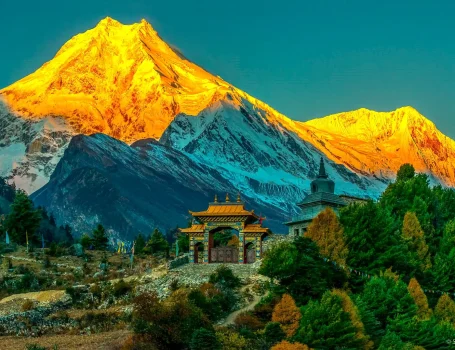
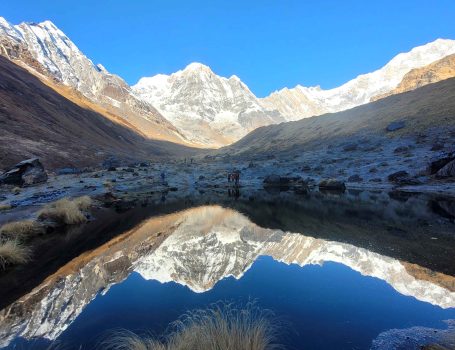
  • Aspire to the extraordinary views of the peaks like Annapurna, Dhaulagiri, and Manaslu from near to far perspective.
  • Cross the highest pass of challenging Thorong La at 5416m with the brilliant views of the nearby Himalayas.
  • Transit through the diverse landscape with a blend of culture, with a sense of accomplishment.
  • Encounter with the diverse ethnic groups of Gurung, Magar, and Manange
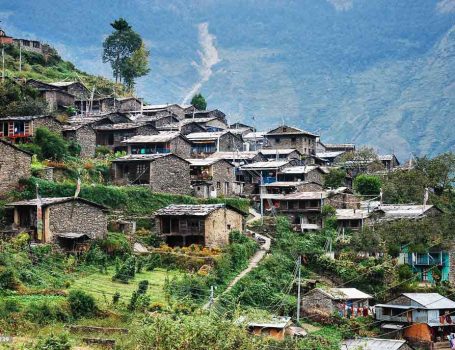
  • Explore the charming villages in Pisang, Manang, and Jomsom
  • Enchant your trek in a more sacred way in the traditional monasteries on your route and the Muktinath Temple.
  • Enjoy the scenic flight from Jomson to Pokhara and Pokhara-Kathmandu to find a different perspective on sightseeing.

Overview

This enchanting and extravagantly adventurous trek to the Annapurna Circuit by All Nepal Excursions is an immersive experience of the blend of adventure and vibrant cultures. We begin the journey from Kathmandu, soaking ourselves in a vibrantly chaotic city. As we ascend towards the major goal of completing the Annapurna Circuit Trek, we cross through the diverse landscapes and terraced fields with the rugged terrain and thin air. The trail leads us to the traditionally covered villages in Pisang and Manang, providing us with the cultural interaction and teachings of the Nepali people. This trek overall provides us with the magical blend of extraordinary adventure and vibrant, brilliant culture, rewarded by the lush views of the Annapurna region for about two weeks.

Our journey peaks as we cross the exhilarating Thorong La Pass (5,416m). This remarkable destination amazes us with the panoramic vistas before descending to the sacred Muktinath Temple. We get the experience of transitioning geology when we descend towards the town of Jomsom from arid highlands to lush valleys. We will visit the sacred Muktinath temple along the way before we set foot on the next journey.

We have a flight to board if the weather is favorable for the transfer to Pokhara from Jomsom. The enchanting journey and aerial views of the striking beauty of the naturally beautiful Annapurna Sanctuary reward with a sense of achievement. Pokhara, with its serene scenery and lakes, awaits us for an enjoyable evening of celebrations. With All Nepal Excursions, the trek to the Annapurna Circuit is made easier and rewarding, all thanks to our meticulously crafted itineraries and skilled guides.

Why Annapurna Circuit Trek?

The Annapurna Circuit trek has a lot of pros to offer you as a trekker in all ways possible. Here are some of the major reasons why one should visit this wonderful destination:

 Main Attraction

This trek to Annapurna Circuit illuminates us with the stunning Himalayan views and serene and captivating landscapes of the lower lands to the gigantic peak of Thorong La Pass. We cross diverse landscapes, cultures, traditions, and rituals on our way to the Annapurna roundabout and back.

History

This trail originated as a trade route between Nepal and Tibet in medieval times. However, this trek gained popularity as a tourist attraction in the mid-1980s to early 1990s. We follow the ancient paths, connecting through the ancient settlements like Pisang and Manang, stepping gradually towards the historic trade link road.

Culture

We will be immersed in the Gurung, Magar, and Manang cultures during the trek. We visit the monasteries and villages like Pisang. These villages promote the ancient culture while juvinating with the modern practices and communal traditions.

Geography

We cross a long route, hence passing through diverse geographic locations. Our trek crosses from the lowest altitude of 760m in Besisahar to the highest point in Thorong La’s rugged terrain at 5416m. We will also navigate rivers and arid zones. This is a dramatic geological diversity altogether.

Flora and Fauna

We will encounter the varied ecosystems in this trek. From subtropical forests and rhododendrons to meadows of alpine flowers. Wildlife consists of snow leopards, diverse birds, and Himalayan tahr. Our journey reveals vibrant flora and fauna throughout the diverse ecology of the Annapurna section.

Best Season for the Annapurna Circuit Trek

Spring Season (March-May)

Spring is one of those suitable seasons to set foot on the Annapurna Circuit. Two weeks of brilliant weather and balanced temperatures allow us the greatest of vistas all around the circuit and a striking offering from Thorong La Pass. The cultural seam provides a boundless experience to the circuit, with new experiences arising in the journey. Also, if the time is right, we get to interact with the locals in communal gatherings.

Autumn Season (September-November)

Autumn is sensibly the best season to trek to this majestic trail. The monsoon is over, and the trail becomes dry and lively to traverse. We will get the experience of mild temperatures and equal days and nights. The post-monsoon brings us a vastly clear and flawless trajectory of the sights we see. Villages like Pisang and Manang glow differently this season. The festivals like Dashain and Tihar are around the corner, so the immersion gets too real to experience. The trail’s natural beauty comprises with the beauty of culture and festivals this season.

⁠Difficulties

  • Crossing Thorang La Pass at 5416m can pose risks of altitude sickness, which requires careful acclimatization and hydration with nutritional food intake.
  • Longer trekking days can last for 6 to 8 hours, like the day when we pass the Thorong La pass. This demands good fitness and endurance for us to traverse through the adventurous setting.
  • The weather can’t be predicted easily in the elevated areas like Thorong La Pass and Thorong Phedi. This can challenge our preparedness and mental endurance.
  • The trails are rough, rocky, and particularly muddy and slippery on various sections. That requires us to depend on our physical ability and balance.

Altitude Sickness

Altitude

The altitude difference of this trek is variable. We start from Kathmandu at 1320 meters and end up at 5416m, which is the highest elevation in Thorang La. To be more specific, we have to start walking from Besisahar(760m) to Thorang La Pass(5416m). The total elevation gain will be a total of 4656m. This trek required careful monitoring and acclimatization.

Acclimatization

On this trek, our acclimatization process of the trek starts with the gradual and steady ascent towards the Annapurna Base Camp. Hydration, slow pacing, proper rest, and nutritious food options ensure the safe adaptation to the rising altitude.

Precaution

To prevent altitude sickness, we have to ascend gradually, hydrate well, and avoid alcohol. Our guides will continually monitor your health status in case you exhibit any symptoms. We advise you to report to your guide as soon as possible if you see any of the symptoms, like nausea, headache, vomiting, and nose-bleeding.

Basic Treatment

For the initial treatments like headaches and nausea, we must rest, hydrate, and descend. We should take Diamox whenever we feel the need for the medication. The helicopter rescue is an option if we catch the severe symptoms like extreme vomiting and unconsciousness.

Rescue

Our guides will tell you if they feel the need for emergency evacuation. This is only possible if you are seriously injured or show severe symptoms of altitude sickness. Guides always coordinate with us to update us about the case and rescue in need. We suggest that you have travel insurance with helicopter coverage in the policy.

Essence of Travel Insurance for the Circuit Trek

Travel Insurance is very essential for high-altitude trips and treks like this. Travel Insurance helps us to safeguard the unforeseen events. The travel insurance should cover medical emergencies, including altitude sickness and emergency helicopter evacuations. Insurance also provides security for your hard-earned money, so it is important to check and consult with your travel agent properly. All Nepal Excursion will help you find the best policy. Proper insurance always saves you the big bucks, so always buy travel insurance before you leave for a trip to another country.

Additional activities

  • We can immerse ourselves in Gurung and Manange culture and witness the cultural chants, with serene views of Annapurna and Dhaulagiri peaks.
  • We explore the vibes of Namche Bazaar and buy trekking gear, souvenirs, and local handicrafts like prayer flags.
  • We can browse Thamel’s bustling streets for Nepali pashminas, trekking supplies, or souvenirs before or after the trek.
  • We must visit UNESCO sites like Boudhanath Stupa and Pashupatinath Temple whenever we are free.
  • We will engage with locals on our rest days by being engaged in their daily chores and practices.
Detailed Itinerary

  • Day 1: Arrival in Kathmandu (1,400 m) and Transfer to Hotel

    Upon your arrival at Tribhuvan International Airport in Kathmandu, you will be welcomed by our representative and transferred to your hotel. Kathmandu is situated at approximately 1,400 meters above sea level and serves as the main gateway to the Annapurna region.
    After completing the hotel check-in, you can take some time to rest after your journey. Depending on your arrival time, you may explore the nearby streets and cultural areas of Kathmandu.
    In the evening, your trekking guide will provide a detailed briefing about the Annapurna Circuit Trek. The briefing will cover the trekking route, daily walking schedule, altitude, weather conditions, trail conditions and important safety information.
    This is also an opportunity to check your trekking equipment and make any final preparations before beginning the journey into the Annapurna region.

    Altitude: 1,400m
    Meals: N/A
    Accommodation: Hotel
  • Day 2: Drive from Kathmandu (1,400 m) to Besisahar (760 m) and Continue to Chame (2,670 m) – 8–10 Hours

    After an early breakfast, begin the scenic drive from Kathmandu at 1,400 meters toward Besisahar at approximately 760 meters.
    The journey follows the Prithvi Highway through the hills of central Nepal. Along the way, you will pass rivers, terraced farmland, traditional villages and green hills.
    After reaching Besisahar, continue toward Chame following the Marsyangdi River Valley. The landscape gradually changes as the road enters the mountainous region, with increasingly dramatic cliffs, waterfalls, forests and snow-covered peaks appearing in the distance.
    Continue through several mountain settlements before reaching Chame at approximately 2,670 meters.
    Chame is the administrative centre of Manang District and an important settlement along the Annapurna Circuit. Upon arrival, you can explore the village and enjoy the surrounding mountain scenery.
    The total journey takes approximately 8–10 hours, depending on road and weather conditions.

    Altitude: 2670m
    Meals: B, L, D
    Accommodation: Teahoue/Lodge
  • Day 3: Trek from Chame (2,670 m) to Upper Pisang (3,300 m) – 5–6 Hours

    After breakfast, begin your first full day of trekking from Chame at 2,670 meters toward Upper Pisang at approximately 3,300 meters.
    The trail initially follows the Marsyangdi River through beautiful pine and fir forests. Along the way, you will cross suspension bridges and pass through small mountain settlements.
    Continue toward Bhratang, an area famous for its apple orchards and dramatic rock formations. The trail then follows the Marsyangdi River through a narrow valley surrounded by impressive cliffs.
    As you continue toward Pisang, the vegetation gradually becomes thinner and the landscape more alpine.
    You will eventually reach Pisang and continue toward Upper Pisang. The upper route provides impressive views of the surrounding mountains and offers a more scenic experience than the lower trail.
    After approximately 5–6 hours of trekking, reach Upper Pisang at 3,300 meters.
    From the village, you can enjoy magnificent views of Annapurna II, Annapurna IV, and Pisang Peak.

    Altitude: 3300m
    Meals: B, L, D
    Accommodation: Tea House /Lodge
  • Day 4: Trek from Upper Pisang (3,300 m) to Manang (3,540 m) via Ghyaru and Ngawal – 6–7 Hours

    Today is one of the most scenic sections of the Annapurna Circuit.
    After breakfast, begin the trek from Upper Pisang at 3,300 meters and take the upper trail toward Ghyaru.
    The trail climbs steadily through a series of switchbacks. Although the ascent is demanding, the higher route rewards you with spectacular views of the Annapurna Mountain range and the Marsyangdi Valley.
    Continue toward Ghyaru, a traditional mountain village surrounded by dry hills and dramatic Himalayan scenery.
    From Ghyaru, continue along the upper trail toward Ngawal. The area has strong Tibetan cultural influences, traditional stone houses, prayer flags and ancient Buddhist traditions.
    After passing Ngawal, the trail gradually descends toward the Marsyangdi Valley. Continue through Braga, where you can see the famous Braga Monastery and traditional stone-built houses.
    From Braga, continue toward Manang at approximately 3,540 meters.
    After approximately 6–7 hours, reach Manang, one of the most important settlements on the Annapurna Circuit.

    Altitude: 3540 m
    Meals: B, L, D
    Accommodation: Tea House/Lodge
  • Day 5: Acclimatization and Exploration Day in Manang (3,540 m) – 3–5 Hours

    Today is an important acclimatization day in Manang at 3,540 meters.
    Rather than continuing directly toward higher elevations, you will spend the day allowing your body to adjust to the altitude.
    A short acclimatization hike can be taken around the Manang Valley. Popular options include hiking toward Gangapurna Lake and the surrounding viewpoints.
    For trekkers who are physically prepared, a longer hike toward a higher viewpoint can be considered. The purpose is to gain some elevation during the day and then return to Manang.
    You can also explore Manang village, visit local monasteries and observe the traditional lifestyle of the people living in this high Himalayan valley.
    The optional hiking activities generally take around 3–5 hours, depending on the selected route.
    The acclimatization day is particularly important because the following days take you above 4,000 meters and eventually to the 5,416-meter Thorong La Pass.

    Altitude: 3540m
    Meals: B, L, D
    Accommodation: Tea House/ Lodge
  • Day 6: Trek from Manang (3,540 m) to Yak Kharka (4,050 m) – 4–5 Hours

    After breakfast, leave Manang at 3,540 meters and begin trekking toward Yak Kharka at approximately 4,050 meters.
    The trail gradually leaves the larger settlement of Manang and enters a more remote alpine environment.
    Continue through Tenki, then pass through small settlements and grazing areas as the trail follows the upper Marsyangdi Valley.
    The vegetation becomes increasingly sparse as you gain altitude. You may see yaks and other animals grazing on the surrounding hillsides.
    Because you are now trekking above 4,000 meters, maintain a slow and comfortable pace. Avoid unnecessary physical exertion and stay properly hydrated.
    After approximately 4–5 hours, reach Yak Kharka at 4,050 meters.
    The surrounding landscape provides impressive views of the Annapurna range and the high Himalayan terrain.

    Altitude: 4,050m
    Meals: B, L, D
    Accommodation: Tea House/Lodge
  • Day 7: Trek from Yak Kharka (4,050 m) to Thorong Phedi (4,450 m) – 4–5 Hours

    After breakfast, continue from Yak Kharka at 4,050 meters toward Thorong Phedi at approximately 4,450 meters.
    The trail follows the mountainside and crosses several sections of rugged terrain. The landscape becomes increasingly barren and alpine as you approach the Thorong La Pass.
    The trail passes through Ledtar before continuing toward Thorong Phedi.
    Although the walking distance is relatively short, the high altitude makes this section physically demanding. Maintaining a slow and steady pace is important.
    After approximately 4–5 hours, reach Thorong Phedi at 4,450 meters.
    Depending on conditions and the group's physical condition, the guide may assess whether it is appropriate to continue toward High Camp. The main objective is to prepare safely for the following day's crossing of Thorong La.

    Altitude: 4450m
    Meals: B, L, D
    Accommodation: Tea House/Lodge
  • Day 8: Trek from Thorong Phedi (4,450 m) to Thorong La Pass (5,416 m) and Descend to Muktinath (3,800 m) – 8–10 Hours

    Today is the most challenging and memorable day of the Annapurna Circuit Trek.
    You will start early in the morning from Thorong Phedi at 4,450 meters. The early start helps provide sufficient time to cross the pass before weather conditions potentially deteriorate later in the day.
    The trail climbs gradually through a series of steep switchbacks toward Thorong La Pass.
    As you gain altitude, the air becomes thinner and the landscape becomes increasingly rugged. The ascent requires a slow and steady pace.
    After approximately 4–5 hours, reach Thorong La Pass at 5,416 meters, the highest point of the Annapurna Circuit.
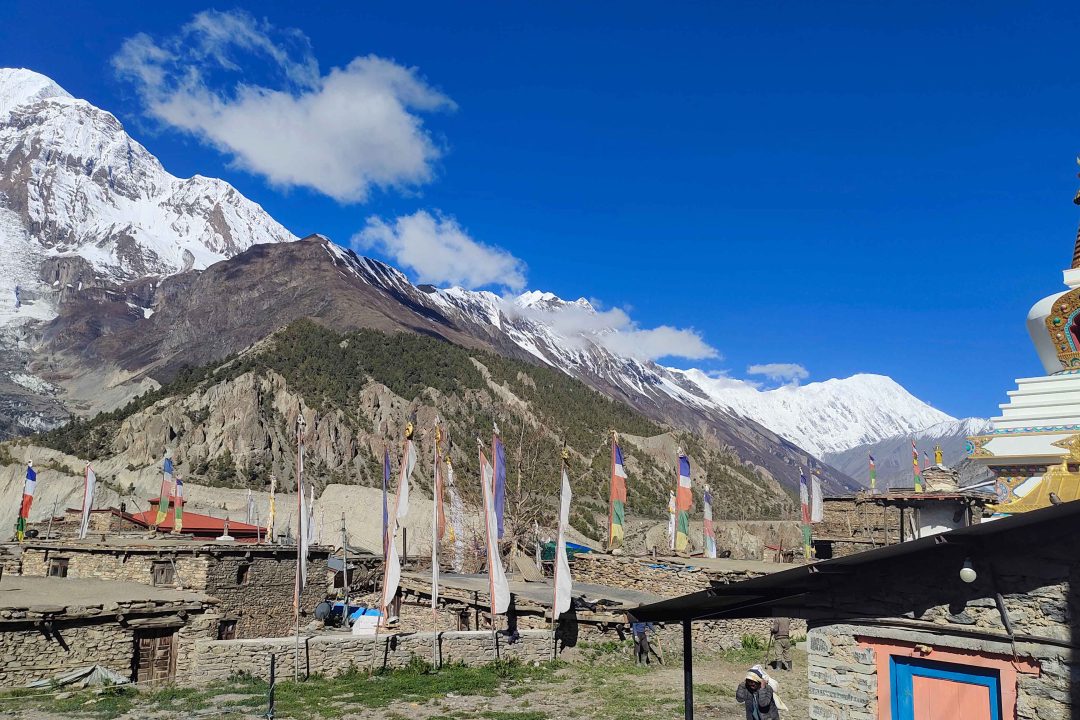
    The pass is decorated with colourful prayer flags and provides spectacular views of the surrounding Himalayan landscape.
    After spending some time at the pass, begin the long descent toward Muktinath at approximately 3,800 meters.
    The descent initially follows a steep rocky trail before gradually becoming easier as you lose altitude.
    Muktinath is an important pilgrimage destination for both Hindus and Buddhists. The area is known for its temples, monasteries and natural religious sites.
    The complete trek from Thorong Phedi across Thorong La and down to Muktinath takes approximately 8–10 hours.

    Altitude: 5416m
    Meals: B, L, D
    Accommodation: Tea House/Lodge
  • Day 9: Trek from Muktinath (3,800 m) to Jomsom (2,720 m) via Kagbeni – 5–6 Hours

    After breakfast, begin the journey from Muktinath at 3,800 meters toward Jomsom at approximately 2,720 meters.
    The trail descends through the dry and windswept landscapes of the Mustang region.
    Continue toward Kagbeni, an ancient settlement situated at approximately 2,810 meters. Kagbeni is known for its traditional stone houses, narrow streets, Buddhist monasteries and strong Tibetan cultural influence.
    After exploring Kagbeni, continue along the Kali Gandaki Valley toward Jomsom.
    The landscape changes dramatically as you descend from the high alpine environment toward the lower Kali Gandaki Valley.
    After approximately 5–6 hours, reach Jomsom at around 2,720 meters.

    Altitude: 2720m
    Meals: B, L, D
    Accommodation: Tea House/Lodge
  • Day 10: Drive from Jomsom (2,720 m) to Tatopani (1,190 m) via Marpha and Ghasa – 7–8 Hours

    After breakfast, begin the scenic drive from Jomsom at 2,720 meters toward Tatopani at approximately 1,190 meters.
    The route follows the Kali Gandaki Valley through one of the deepest river valleys in the world.
    The first major stop is Marpha at approximately 2,670 meters, a beautiful traditional Thakali village famous for its whitewashed stone houses, narrow lanes and apple orchards.
    Continue through Tukuche and toward Ghasa, where the landscape gradually becomes greener and more forested.
    The journey continues along the Kali Gandaki River before reaching Tatopani at approximately 1,190 meters.
    Tatopani is famous for its natural hot springs. If time permits, you can relax in the hot springs and enjoy the warm environment after several days of high-altitude trekking.
    The drive generally takes approximately 7–8 hours, depending on road conditions.

    Altitude: 1190m
    Meals: B, L, D
    Accommodation: Tea House/Lodge
  • Day 11: Drive from Tatopani (1,190 m) to Pokhara (820 m) – 4–5 Hours

    After breakfast, begin the drive from Tatopani at 1,190 meters toward Pokhara at approximately 820 meters.
    The road follows the lower Kali Gandaki Valley through green hills, forests, agricultural areas and traditional villages.
    As you continue toward Pokhara, the landscape gradually changes from the mountain environment to the subtropical middle hills of Nepal.
    After approximately 4–5 hours, reach Pokhara.
    Pokhara is one of Nepal's most popular tourist destinations and is situated beside the beautiful Phewa Lake.
    After arriving, you can relax or explore the Lakeside area, enjoy local restaurants and cafés, or take a peaceful walk around Phewa Lake.

    Altitude: 820m
    Meals: BB
    Accommodation: Hotel
  • Day 12: Drive from Pokhara (820 m) to Kathmandu (1,400 m) – 6–8 Hours

    After breakfast, begin the drive from Pokhara at 820 meters to Kathmandu at approximately 1,400 meters.
    The journey follows the scenic highway through Nepal's central hills.
    Along the way, you will pass through traditional villages, terraced farmland, forests and river valleys.
    The journey generally takes approximately 6–8 hours, depending on traffic, road conditions and stops.
    Upon arrival in Kathmandu, transfer to your hotel and spend the remainder of the day relaxing after the long journey.

    Altitude: 1400m
    Meals: BB
    Accommodation: Hotel
  • Day 13: Free Day in Kathmandu (1,400 m) for Rest, Sightseeing and Shopping

    Today is a free day in Kathmandu at approximately 1,400 meters.
    After completing the Annapurna Circuit, you can spend the day relaxing or exploring Kathmandu's cultural and historical attractions.
    Depending on your interests, you may visit Boudhanath Stupa, Swayambhunath, Kathmandu Durbar Square or Pashupatinath Temple.
    You can also use the day for shopping for traditional handicrafts, souvenirs, trekking equipment and local products in the markets around Thamel.
    The day provides a comfortable opportunity to relax before your international departure.

    Altitude: 820m
    Meals: BB
    Accommodation: Hotel
  • Day 14: Final Departure from Kathmandu (1,400 m)

    Your 14-day Annapurna Circuit Trek officially concludes today.
    Depending on your flight schedule, you will be transferred from your hotel to Tribhuvan International Airport, located at approximately 1,400 meters.
    Our representative will assist you with the airport transfer and ensure that you reach the airport in sufficient time for your international flight.
    You will depart Nepal with memorable experiences of the Annapurna Mountain range, Manang Valley, Thorong La Pass, Muktinath, Mustang, and the Kali Gandaki Valley.

    Altitude: 1,300m

What's included

  • Arrival and departure by private vehicle
  • Full day guided Kathmandu sightseeing by private vehicle
  • Kathmandu to Jagat transportation by shared jeep transportation.
  • Jomsom-Pokhara shared jeep bus transportation.
  • Pokhara to Katmandu by shared tourist coach.
  • Three Meals  (breakfast, lunch and dinner) during the trek.
  • Clean tea-house/lodge accommodation during the trek on twin sharing basis(attached bathroom can be booked on extra payment).
  • Government license holder English speaking Guide and his food, accommodations, salary, insurance,  equipment, medicine and transportation.
  • Annapurna Conservation Area Project permit  fees.
  • Complementary farewell dinner.
  • Travel & Rescue arrangements.

What's not included

  • Entrance fees for sightseeing places
  • All  meals and accommodation at Kathmandu
  • Supporting staff(2 trekkers-1 supporting staff)
  • Personal expenses such as laundry, telephone calls, sweets, snacks, tips, etc.,
  • All beverages and bar bills.
  • Travel Insurance (Essential - Should include emergency evacuation coverage while trekking up to 5545 meters).
  • Personal trekking equipment except stated above.
  • Donations
  • Entrance fee while doing sightseeing around Kathmandu
  • Porter’s accommodations, salary, insurance, equipment, medicine and transportation.
  • Insurance of Guide and porter.
  • Any loss arising due to unforeseen circumstances that is beyond All Nepal Excursion control.
  • Tips for guide and supporting staffs ( mandatory )

Equipment

Equipment & Gear for Trekking in Annapurna Circuit Trek:

Before embarking on a trek to Annapurna Circuit Trek, it is essential to pack the necessary gear and equipment. Here is a checklist of essential trekking gear you should take with you:

Clothing:

  • Warm and waterproof/hard-shell jacket
  • Fleece or soft shell jacket
  • Hiking pants and shorts
  • Long-sleeved trekking shirts
  • Thermal underwear
  • Hiking socks
  • Insulated and waterproof gloves or mittens
  • Warm hat and headwear to protect your face and neck from the sun

Footwear:

  • Sturdy and waterproof hiking boots
  • Gaiters to protect your boots and legs from snow, mud and dirt

Backpack:

  • Large backpack (50 to 80 liters) with a rain cover
  • Daypack (around 20 liters) to carry essential items during the day

Sleeping and Shelter:

  • Trekking poles with snow baskets
  • Sleeping bag rated for sub-zero temperatures (comfort level)
  • Sleeping pad
  • Headlamp with extra batteries
  • Personal First Aid Kits and medicines

Electronics:

  • Camera and extra batteries
  • Portable chargers for electronic devices
  • Solar-powered chargers (optional)

Others:

  • Water bottles/hydration packs and filters or purification tablets
  • Lightweight and quick-drying towel
  • Sunscreen and lip balm
  • Insect repellent
  • Whistle and compass
  • Cash and necessary documents (passport, permits, trekking maps, insurance)
  • Trekking map and guides

It is important to note that this checklist may vary depending on the weather conditions, trekking route, and personal preferences. It is advisable to pack light and carry only the essential items to make your trek comfortable and hassle-free.

FAQs of Annapurna Circuit Trek

  • 1. What is the Annapurna Circuit Trek?

    The Annapurna Circuit Trek is a classic trekking route in Nepal that circumnavigates the Annapurna Massif. It offers stunning views of Annapurna, Dhaulagiri, Machapuchare, and other peaks, and takes you through diverse landscapes and ethnic villages.
  • 2. How long does the trek take?

    The trek typically takes around 12 to 21 days, depending on your pace, the route you choose, and the time you spend acclimatizing.
  • 3. What is the best time to do the Annapurna Circuit Trek?

    The best times to trek are during the pre-monsoon (March to May) and post-monsoon (September to November) seasons. During these periods, the weather is generally stable, and the views are clear.
  • 4. What is the highest point on the Annapurna Circuit Trek?

    The highest point on the trek is the Thorong La Pass at 5,416 meters (17,769 feet).
  • 5. Is the trek difficult?

    The difficulty of the trek varies. While the Annapurna Circuit is considered a moderate to challenging trek, it requires good physical fitness and stamina, especially for crossing the high Thorong-La Pass.
  • 6. Do I need a guide or porter?

    It is not mandatory to have a guide or porter, but many trekkers find it helpful. A guide can enhance your experience with local knowledge, and a porter can carry your heavy gear, making the trek more enjoyable.
  • 7. How do I get to the Annapurna Circuit?

    The trek typically starts from Besisahar, which can be reached by a bus or private vehicle from Kathmandu or Pokhara.
  • 8. Can I buy or rent gear in Nepal?

    Yes, you can rent or buy trekking gear in Kathmandu. However, it's advisable to bring essential items like your own trekking boots and sleeping bag.
  • 9. What kind of cultural experiences can I expect?

    You’ll experience diverse cultures, including Hindu and Buddhist practices. You'll visit traditional villages, monasteries, and have the chance to interact with local people.
  • 10. How should I respect local customs?

    Dress modestly, especially when visiting religious sites. Always ask permission before taking photographs of people, and respect local traditions and practices.
  • 11. What drinks are available on the Annapurna Circuit trek?

    We will have safe drinking water in almost every teahouse and lodge we get in. However, the boiled or filtered water can cost some. Tea, coffee, and soft drinks are widely available, but soft drinks might not be accessible in the higher lands.
  • 12. What food can we expect during the Annapurna Circuit trek?

    Teahouses during the trail offer healthy and nutritious meals like Nepali dal bhat and breakfast options of pasta, noodles, and Tibetan bread. Higher altitudes have limited options. We will get ample food options in Kathmandu, Pokhara, and Jomsom.
  • 13. Is solo trekking for the Annapurna Circuit safe?

    The Annapurna Circuit is characterized by rugged terrain and higher altitudes. Thus, we do not suggest hiking alone because of the risks at high altitudes and the wild routes. Having a guide or friend with you keeps you safe and makes the trek more fun while you enjoy the calm of the Himalayas.
  • 14. How do we respect local culture during the trek?

    We pay respect to Gurung and Buddhist traditions by walking clockwise around their stupas and stones. You shouldn't be touching their religious artifacts, and ask permission from the priests when taking photographs. We need to keep quiet when we are in the religious periphery.
  • 15. How could I prepare for this hike?

    Train with cardio, do light gym work, and hike to higher places. It is key to adapt well, go up slowly, and drink enough water to get ready. Some light exercise, like cardio, is smart.
  • 16. How much should we tip our guides and porters?

    There is no rule for tipping the guides and porters, but we suggest the tips of $10-12 per day for guide and $8-10 per day for porters, given at the end of the trek. We suggest that you only tip when you are satisfied.
  • 17. What are the major accommodation and food facilities?

    We offer 3-star places to stay that come with modern comforts and good food options in Kathmandu city. The teahouses in the trail provide hygienic and clean facilities.

What Other Travellers' Say

Trip You May Like

Handpicked adventures tailored for you—explore trips that match your travel spirit and curiosity.
khumai danda trek

Khumai Danda Short Trek

Duration: 4 Days Trekking
Mardi Himal Trekking

Mardi Himal Trek

Duration: 9 Days Trekking
rara lake trek

Rara Lake Trek

Duration: 9 Days Trekking

Everest Three Passes Trekking

Duration: 19 Days Trekking

Annapurna Base Camp Trek

Duration: 12 Days Trekking

Upper Dolpo Trek

Duration: 26 Days Trekking

Our Affiliations

We are proudly affilliated with following organizations.

Planning a Trip?

Our travel experts who are working in this industry for more than a decade will help you. Consult to get started.

Meet Our Travel Expert

Dipendra Thapa
Nepal, Tibet and Bhutan