1110
The Everest Base Camp with Gokyo Ri Trek is one of the most spectacular and adventurous trekking journeys in Nepal. This trek combines the classic Everest Base Camp route with the beautiful Gokyo Valley, offering a perfect mix of mountain scenery, Sherpa culture, glaciers, lakes, and high Himalayan passes. It is an ideal adventure for trekkers who want to experience both the famous Everest region and the peaceful beauty of the Gokyo Lakes.
The journey begins in Kathmandu, where trekkers prepare for the adventure before taking a scenic mountain flight to Lukla. The short flight itself is unforgettable, offering stunning views of hills, valleys, and snow-covered peaks. From Lukla, the trekking journey begins through traditional Sherpa villages, pine and rhododendron forests, and stunning river valleys. The trail follows the Dudh Koshi River and crosses several suspension bridges decorated with colourful prayer flags.
One of the first major highlights of the trek is Namche Bazaar, the main trading center of the Everest region. This lively mountain town is surrounded by beautiful hills and offers cafés, bakeries, shops, and excellent mountain views. Trekkers spend an acclimatization day here to adjust to the increasing altitude while exploring nearby viewpoints and Sherpa villages.
After leaving Namche, the trail moves away from the main Everest route and enters the quieter Gokyo Valley. This part of the trek feels more peaceful and less crowded, allowing trekkers to enjoy nature more deeply. The landscape slowly changes from green forests to open alpine valleys surrounded by massive peaks and glaciers. Villages like Dole and Machhermo provide important overnight stops before reaching the beautiful Gokyo region.
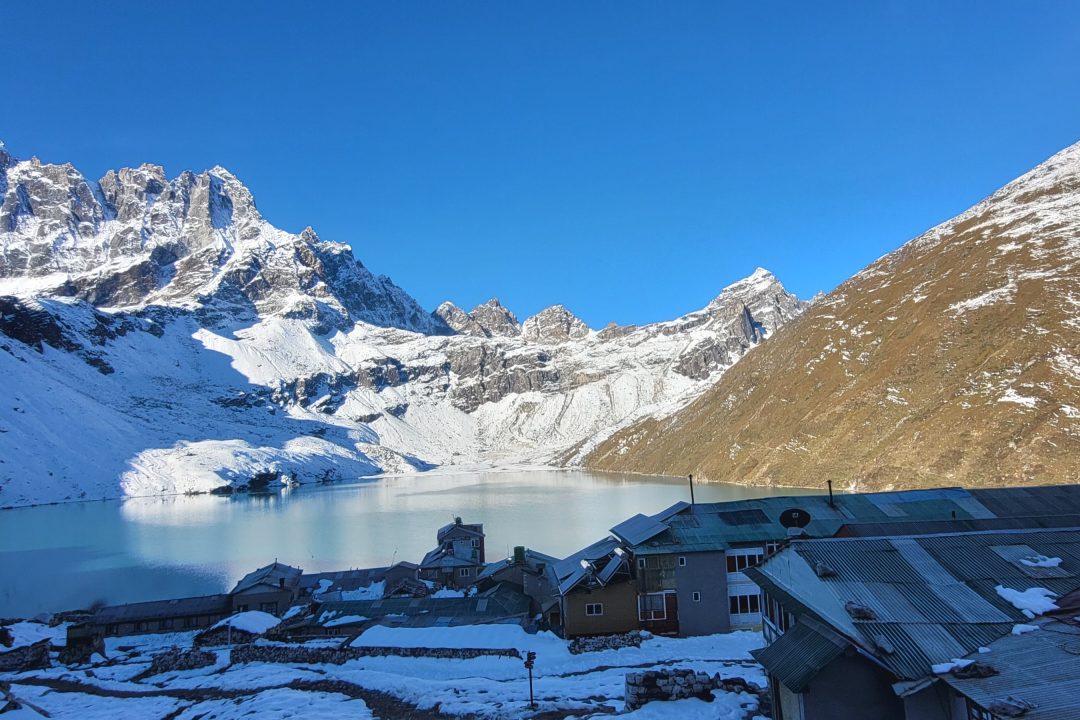
Gokyo is one of the most breathtaking places in the Himalayas. The turquoise Gokyo Lakes, surrounded by snow-covered mountains and glaciers, create an unforgettable landscape. A hike to Gokyo Ri offers one of the best panoramic views in Nepal. From the summit, trekkers can see Mount Everest along with Lhotse, Makalu, Cho Oyu, and many other Himalayan peaks. The sunrise view from Gokyo Ri is considered one of the finest mountain panoramas in the world.
The adventure continues with the challenging crossing of Cho La Pass at 5,420 meters. This is one of the toughest but most rewarding sections of the trek. The trail crosses rocky and icy terrain surrounded by dramatic glacier scenery. Reaching the top of the pass feels like a major achievement and provides unforgettable mountain views.
After crossing Cho La Pass, the route joins the classic Everest Base Camp trail. Trekkers continue through Lobuche and Gorak Shep before finally reaching Everest Base Camp. Standing at the base of the world’s highest mountain is an emotional and unforgettable moment for many trekkers. The surrounding icefalls, glaciers, and expedition camps create a true Himalayan atmosphere.
Another major highlight is the early morning hike to Kala Patthar, the best viewpoint for close views of Everest. Watching sunrise over Everest and the surrounding peaks is one of the most rewarding experiences of the entire journey. The golden light reflecting on the mountains creates an unforgettable scene.
Besides mountain views, the trek also offers a deep cultural experience. Trekkers pass through traditional Sherpa villages, visit Buddhist monasteries, and experience the warm hospitality of local people. Prayer flags, mani stones, chortens, and ancient traditions are part of everyday life in the Everest region.
Overall, the Everest Base Camp with Gokyo Ri Trek is a complete Himalayan adventure. It combines high mountain passes, glaciers, turquoise lakes, rich Sherpa culture, and the unforgettable experience of standing near the world’s highest peak. For trekkers seeking both natural beauty and personal challenge, this journey remains one of the greatest trekking experiences in the Himalayas.
Highlights
Arrival at Tribhuvan International Airport in Kathmandu, where you are welcomed by your trekking team and transferred to your hotel in Thamel or nearby tourist areas. Kathmandu is a dense cultural hub filled with temples, courtyards, markets, and trekking infrastructure, serving as the gateway to the Everest region.
After check-in, you can rest after your international flight or explore nearby streets for gear checks, SIM cards, currency exchange, and last-minute shopping. Thamel is especially active with trekking agencies, cafés, and equipment stores catering to high-altitude expeditions.
In the evening, your guide provides a full expedition briefing covering the route inside Sagarmatha National Park, altitude progression, safety protocols, weather expectations, and flight procedures to Lukla. All necessary permits and logistics are finalized. Overnight stay in Kathmandu.
Early morning transfer to the domestic airport for a scenic mountain flight to Lukla, one of the most dramatic airstrips in the world, surrounded by Himalayan peaks. On landing, you meet your porter team and officially begin the trek into the Khumbu Valley.
The trail descends gradually through stone-paved paths, small Sherpa settlements, and forested terrain along the Dudh Koshi River. You cross several suspension bridges decorated with prayer flags and pass mani walls carved with Buddhist inscriptions.
The trek is relatively gentle today, allowing your body to adjust to altitude. Phakding is a peaceful riverside village surrounded by pine forests, where trekkers often hear the river throughout the night. Overnight stay at Phakding.
The trail follows the Dudh Koshi River and includes multiple suspension bridge crossings, including the iconic Hillary Suspension Bridge. You enter the checkpoint of Sagarmatha National Park at Monjo, where permits are verified.
After Jorsalle, the trail becomes steep and physically demanding, climbing through pine and rhododendron forest. The ascent to Namche is long but rewarding, especially when weather allows your first glimpse of Mount Everest in the distance.
Namche Bazaar is a bustling Sherpa town with bakeries, gear shops, cafés, and cultural museums. It is the main acclimatization hub of the Khumbu region. Overnight stay at Namche.
This rest day is essential for adjusting to high altitude. A short acclimatization hike to Everest View Hotel or Khumjung village provides panoramic views of Everest, Lhotse, Ama Dablam, and Thamserku.
You may also visit Sherpa museums, monasteries, or explore local markets. The goal is to stay active but avoid overexertion, helping your body adapt to reduced oxygen levels.
Namche’s bakeries and cafés offer comfort food and warm drinks, making it a pleasant rest stop before entering higher elevations. Overnight stay at Namche.
Today you leave the main Everest Base Camp route and enter the quieter Gokyo Valley trail. The path climbs steeply out of Namche into forests of pine, juniper, and rhododendron.
You pass Mong La, a scenic ridge offering stunning views of Khumbu valleys and surrounding peaks. The trail becomes more remote and less crowded, offering a peaceful trekking experience.
As altitude increases, vegetation becomes sparse and landscapes more alpine. Dole is a small settlement surrounded by yak pastures and rugged hills. Overnight stay at Dole.
The trail continues gradually upward through wide glacial valleys and alpine terrain. You pass seasonal yak herder settlements and open landscapes shaped by glacial activity.
Machhermo is an important stop for altitude awareness, with a Himalayan Rescue Association post providing medical information and safety advice. This is where trekkers often learn about Acute Mountain Sickness (AMS).
The views of Cho Oyu and the surrounding peaks become more prominent. The environment is colder, windier, and more exposed. Overnight stay at Machhermo.
The trail enters one of the most scenic sections of the trek along the Ngozumpa Glacier, the longest glacier in Nepal. The terrain is rocky, icy, and dramatically shaped by glacial movement.
As you approach Gokyo, the famous turquoise lakes begin to appear, creating one of the most iconic landscapes in the Himalayas. The contrast between blue lakes, white glaciers, and snow peaks is breathtaking.
Gokyo village sits beside the lakes, offering one of the highest and most beautiful settlements in Nepal. Overnight stay at Gokyo.
Early morning ascent to Gokyo Ri is steep and demanding but offers one of the best panoramic viewpoints in the world. From the summit, you see Mount Everest, Lhotse, Makalu, Cho Oyu, and the entire Himalayan range.
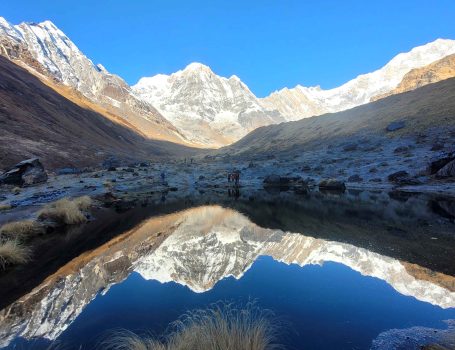
After descending, you explore the sacred Gokyo Lakes system, considered holy in both Hindu and Buddhist traditions. The reflections of mountains in the lakes create a surreal atmosphere.
The rest of the day is reserved for acclimatization and recovery. Overnight stay at Gokyo.
One of the most challenging days of the trek begins early with the ascent to Cho La Pass. The climb involves steep rocky sections, ice patches, and glacier crossing depending on season conditions.
At the top, panoramic views of surrounding peaks and glaciers are rewarding. The descent toward Dzongla is technical and requires careful movement over rocky terrain.
Dzongla is a small, remote settlement offering basic accommodation and dramatic mountain surroundings. Overnight stay at Dzongla.
A shorter but high-altitude trek across moraine fields and glacial terrain. The landscape is barren, rocky, and surrounded by towering peaks.
You reconnect with the main Everest Base Camp trail at Lobuche, a small settlement with basic lodges and close-up views of surrounding glaciers. Overnight stay at Lobuche
Today is the most important day of the journey. You trek across the Khumbu Glacier moraine toward Everest Base Camp.
The terrain is challenging but symbolic, and reaching Base Camp gives a strong sense of achievement surrounded by icefalls and expedition tents (in climbing seasons). After spending time there, you return to Gorak Shep for overnight stay.
Early morning hike to Kala Patthar provides the closest and most iconic view of Mount Everest at sunrise, with golden light illuminating the Himalayas.
After descending, you trek down through alpine valleys, passing Pangboche and Tengboche region areas. The descent brings more oxygen and greener surroundings.
Pheriche is a windy but comfortable valley settlement used for acclimatization and recovery. Overnight stay at Pheriche.
A long descent through forests, bridges, and Sherpa villages. You pass Tengboche monastery region and re-enter greener landscapes.
Namche Bazaar feels warmer, livelier, and more comfortable after high-altitude trekking. It is a welcome return to bakeries and proper amenities. Overnight stay at Namche.
Final trekking day retracing the Dudh Koshi Valley. You pass familiar villages, suspension bridges, and forest trails while reflecting on the journey.
Reaching Lukla marks the completion of the trekking section. Evening celebration with the trekking team is common. Overnight stay at Lukla.
Morning flight back to Kathmandu. After arrival, transfer to hotel for rest and recovery. You can explore the city, shop, or enjoy a farewell dinner in Thamel.
Overnight stay in Kathmandu.
Depending on your flight schedule, you will be transferred to Tribhuvan International Airport. This concludes your Everest Base Camp with Gokyo Ri Trek, leaving lifelong memories of glaciers, high passes, Sherpa culture, and the world’s highest mountains.
List of Trekking equipment and gears