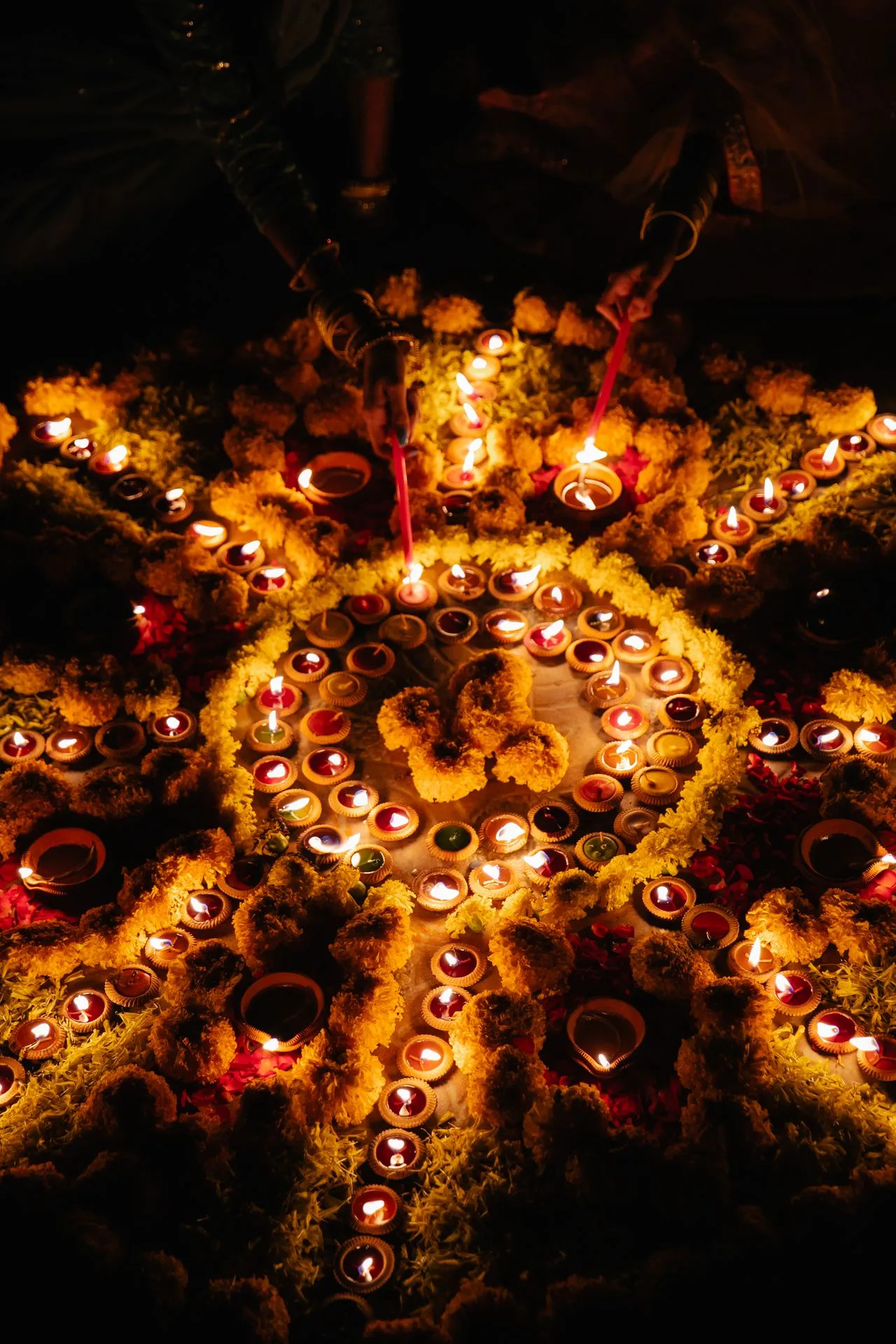
Tihar is one of the brightest festivals in Nepal, often called the festival of lights and flowers. It lasts five days. People honor animals, thank the gods, and celebrate the bond between brothers and sisters. In 2026, homes, streets, teahouses, and mountain villages will glow with oil lamps (diyos), marigold garlands, and colorful rangoli.
Tihar is also called Deepawali or Yama Panchak. Most festivals focus on one god. Tihar includes animals, people, and gods together: crows, dogs, cows, and oxen are honored, along with Goddess Laxmi and the Bhai Tika ritual. Along with Dashain, it is one of Nepal’s biggest festivals. If you plan a trek in Nepal in autumn, Tihar is one of the best ways to see local culture up close.
Legends Behind Tihar
Every big Hindu festival has old stories behind it, and Tihar is no different. These stories explain why people follow each ritual, a bit like the stories you hear from your guide on the trail.
The Story of Yama and Yamuna
Yamuna invited her brother Yama, the god of death, to her home and honored him with special rituals. Yama was so pleased that he promised long life to brothers whose sisters repeat the ritual. This is how Bhai Tika began.
Goddess Laxmi and Lord Krishna
On the third day, families clean and decorate their homes to welcome Goddess Laxmi, the goddess of wealth. Another story tells how Lord Krishna lifted Govardhan hill to protect villagers from Indra, the rain god. Govardhan Puja on the fourth day is a thank-you for that protection.
Quick Facts
- Nepali communities around the world celebrate Tihar.
- The five days stand for harmony between nature, family, and the gods.
- Crows, dogs, and cows are seen as messengers and companions of the gods.
Why Tihar Matters in Nepal
Family Bonds
On Bhai Tika, sisters put a seven-colored tika on their brothers’ foreheads, give sweets, and wish them a long life. Brothers give gifts and promise to protect their sisters.
Community Spirit
Groups of young people walk from house to house singing Deusi Bhailo songs. They play the madal and harmonium and perform folk dances. In many villages, this goes on till midnight, and families offer sel roti, fruits, and sweets. Trekkers staying in a village teahouse may well be invited to join.
Practical Meaning Behind the Rituals
- Feeding crows shows respect for nature’s messengers.
- Decorating dogs honors their loyalty and protection.
- Worshipping cows and oxen reflects how much farming and milk matter in the hills.
- Tihar comes after the harvest, so families have plenty of food and flowers.
Tihar 2026 Dates
Tihar follows the lunar calendar, so the dates change every year. In 2026, it runs from November 7 to November 11. In the Nepali calendar, it falls in the month of Kartik, 2083 BS. It comes at the new moon (Amavasya), right after the harvest, when the weather is also clear and ideal for trekking.
Five Days of Tihar: Day-by-Day Guide
Think of it like a trekking itinerary. Each day has its own theme.
Day 1: Kaag Tihar (Crow Day)
Crows are seen as messengers of Yama. People wake early and leave rice and other offerings on rooftops to keep bad luck away. In the Terai and in hill villages, children join in.
Day 2: Kukur Tihar (Dog Day)
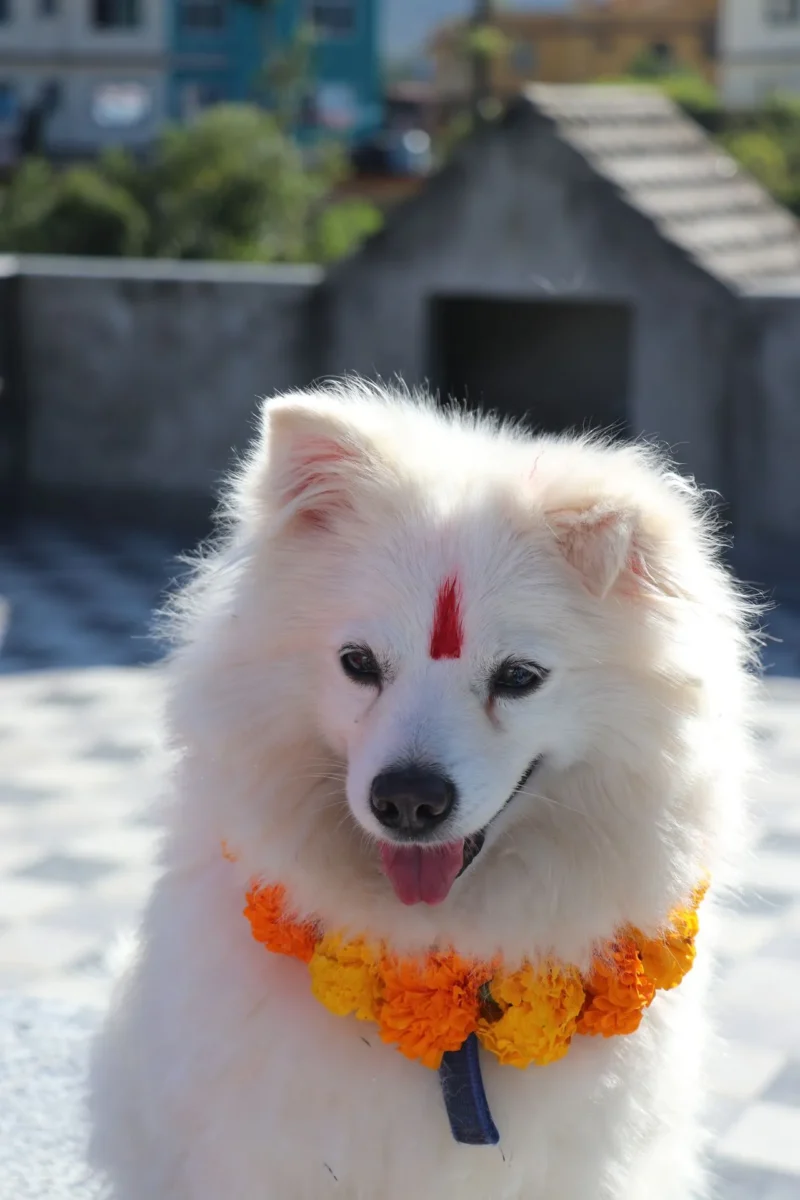
This is often the most fun day for visitors. Dogs get flower garlands, tika, and treats, because they are seen as Yama’s gatekeepers. Many travelers join in decorating street dogs in Kathmandu, Pokhara, and Bhaktapur, the usual starting points before a trek.
Day 3: Gai Tihar and Laxmi Puja (Cow Day and Goddess Laxmi)
Cows receive garlands and tika as symbols of wealth and motherhood. In the evening, families light diyos, make rangoli at their doors, and offer sweets to Goddess Laxmi. Whole neighborhoods glow with lamps and marigolds, making this the most beautiful night of the festival.
Day 4: Goru Tihar and Govardhan Puja (Ox Day)
Oxen are honored for plowing the fields. Families make small mounds of cow dung to represent Govardhan hill. The Newar community also does Mha Puja, honoring one’s own body and soul, as part of their New Year, Swanti.
Day 5: Bhai Tika (Brother-Sister Day)
Sisters put the seven-colored tika on their brothers, offer sweets and fruits, and place Makhamali flower garlands around their necks. Brothers give gifts in return, which strengthens the bond.
Cultural Practices and Key Elements of Tihar
Tihar is more than rituals. It is full of customs that make it feel truly Nepali, and you will notice many of them on the trail as well as in the cities.
Deusi and Bhailo Songs
Groups of kids and teens go from house to house singing, dancing, and playing the madal drum. Families give them sel roti, food, or a little money. Trekkers resting at a village teahouse in the evening often hear these groups arriving.
Decorations and Symbols
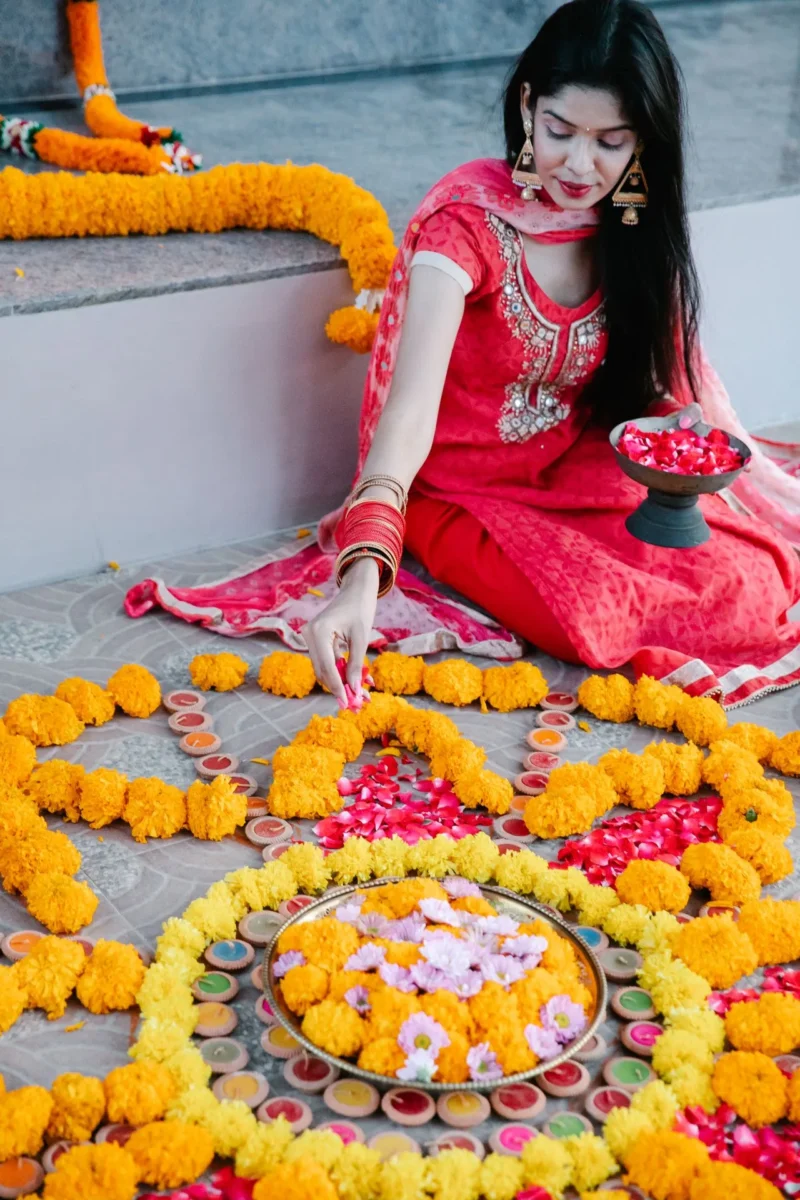
Homes, streets, and teahouses are lit with diyos and decorated with marigold and makhamali garlands and bright rangoli. The glow of lamps and flowers makes villages look beautiful after a day on the trail. People often compare Tihar to Diwali in India.
Traditional Foods and Offerings
Families prepare sel roti, yomari, anarasa, laddu, peda, fruits, and rice dishes. They share these with family, animals, and visitors, so a trekker may get a festive snack along with the usual dal bhat.
Mha Puja: Celebration of Self
For the Newar community, Tihar falls on the Nepal Sambat New Year. During Mha Puja, people clean and care for themselves to stay healthy and lucky.
Regional Variations and Tihar Outside Nepal
The whole country celebrates Tihar, but customs change from one region and community to another, just as the trail and culture change from valley to valley.
Kathmandu Valley
Kathmandu, Bhaktapur, and Patan have decorated streets, big Deusi Bhailo performances, and rangoli competitions. These are the easiest celebrations for tourists to see before or after a trek.
Pokhara and the Terai
Rural areas around Pokhara and the Terai keep a strong farming feel. People gather for Sakhiya dances and folk songs and perform rituals to honor farm animals.
Ethnic Communities
- Newar: Mha Puja and the Nepal Sambat New Year.
- Tharu: Sakhiya dance and local rituals.
- Maithil: Detailed rangoli designs and worship of household gods.
- Gurung: Their own folk traditions mixed with regular Tihar customs. You will see this on treks like Ghorepani Poon Hill and Annapurna Base Camp.
Tihar Abroad
Nepalis in countries like Australia and the USA also celebrate Tihar. They hold local gatherings, sing Deusi Bhailo, and even do Bhai Tika over video calls when family is far away.
Tourism and Trekking During Tihar
Tihar is a great time to visit Nepal. Kathmandu, Pokhara, Lalitpur, and Janakpur have glowing streets and many cultural events. Many travelers plan their treks around the festival, because the villages along the route are full of celebration, which adds a cultural side to the trail. Here are some good options:
| Duration | Trek | Highlights | Why It Suits Tihar |
|---|---|---|---|
| Short treks (3–6 days) | Ghorepani Poon Hill | Sunrise over Annapurna and Dhaulagiri, Gurung villages | Quick trek with strong festive feel in the villages |
| Mardi Himal | Close views of Machapuchare (Fishtail), peaceful trail | Short and less crowded, with local celebrations | |
| Helambu Trek (5–6 days) | Near Kathmandu, Buddhist culture | Easy access, and you can be home for Bhai Tika | |
| Gosainkunda Trek (5–6 days) | Sacred alpine lake, mountain views | Spiritual and cultural, fits the holiday week | |
| Medium treks (7–10 days) | Langtang Valley (7–9 days) | Tamang and Sherpa culture, glaciers, mountain views | Moderate trek with festive village life |
| Annapurna Base Camp (7–10 days) | Famous base camp, Annapurna Sanctuary | Scenic route with villages decorated for Tihar | |
| Khopra Ridge (8–9 days) | Wide views of Annapurna and Dhaulagiri | Less crowded, authentic village Tihar | |
| Long treks (12–18 days) | Everest Base Camp (12–14 days) | Everest views, Sherpa culture | Clear skies and decorated Sherpa villages |
| Manaslu Circuit (14–16 days) | Remote trail, cultural variety, high pass | Off-the-beaten-path Tihar experience | |
| Upper Mustang (12–15 days) | Tibetan-style plateau, desert-like scenery | Unique culture and a different festival feel | |
| Tsum Valley (14–16 days) | Remote monasteries, Tibetan influence | Spiritual and cultural depth with fewer crowds |
Each of these treks lets you enjoy the spirit of Tihar while walking through Nepal’s mountain scenery. If you are planning one, All Nepal Excursion can guide you so your trip is safe, meaningful, and memorable.
Is Tihar the Same as Diwali?
People often compare them because both are festivals of lights. But Tihar is special to Nepal, with traditions like Kaag Tihar, Kukur Tihar, and Bhai Tika. Diwali in India mostly celebrates Lord Rama’s return to Ayodhya and the victory of light over darkness. Tihar focuses on balance and harmony between animals, humans, and gods.
Interesting Facts About Tihar
- It is Nepal’s second biggest festival after Dashain.
- It lasts five days.
- Crows, dogs, cows, and oxen are worshipped.
- Homes are decorated with diyos, rangoli, and flowers.
- Deusi Bhailo is a tradition unique to Nepal.
- Special foods include sel roti and anarasa.
- For Newars, Mha Puja falls on the Nepal Sambat New Year.
- The seven-colored tika of Bhai Tika stands for long life.
- The festival celebrates nature, animals, people, and gods together.
Social and Practical Meaning
Many Tihar customs teach people to care for the environment, respect animals, and stay connected as a community. Whether it is feeding birds or lighting oil lamps, each act has a meaning and a practical purpose.
To Sum Up
Tihar is a five-day journey through Nepal’s culture, traditions, and community life, a bit like a short trek. It runs from the fun of Kukur Tihar to the emotional Bhai Tika. For travelers, it is one of the best times to be in Nepal, with cities and mountain villages full of lights, flowers, music, and food.
If you are visiting Nepal in 2026, plan your trip during Tihar to experience the festival of lights and flowers. Book your trek with All Nepal Excursion, a trusted and licensed trekking agency in Nepal.
FAQs
1) What is Tihar?
Tihar is a five-day Hindu festival in Nepal that honors animals, celebrates brothers and sisters, and worships Goddess Laxmi.
2) Why is Tihar celebrated?
It honors Yama and Goddess Laxmi and strengthens family and community bonds.
3) How can tourists join Tihar celebrations?
Tourists can join Deusi Bhailo groups, watch Kukur Tihar, and enjoy the decorations in the cities and trekking villages.
4) What is the significance of Tihar?
It celebrates harmony between nature, animals, people, and gods.
5) What special foods are made for Tihar?
Sel roti, yomari, anarasa, laddu, peda, fruits, and rice dishes.
6) What is Deusi Bhailo?
Groups sing and dance from door to door and receive gifts in return.
7) Do all communities celebrate Tihar the same way?
The spirit is the same, but customs differ among Newar, Tharu, Maithil, Gurung, and other communities.